What tree service insurance costs, and why
Updated 2026-10-18 · 9 min read · Safety & the trade
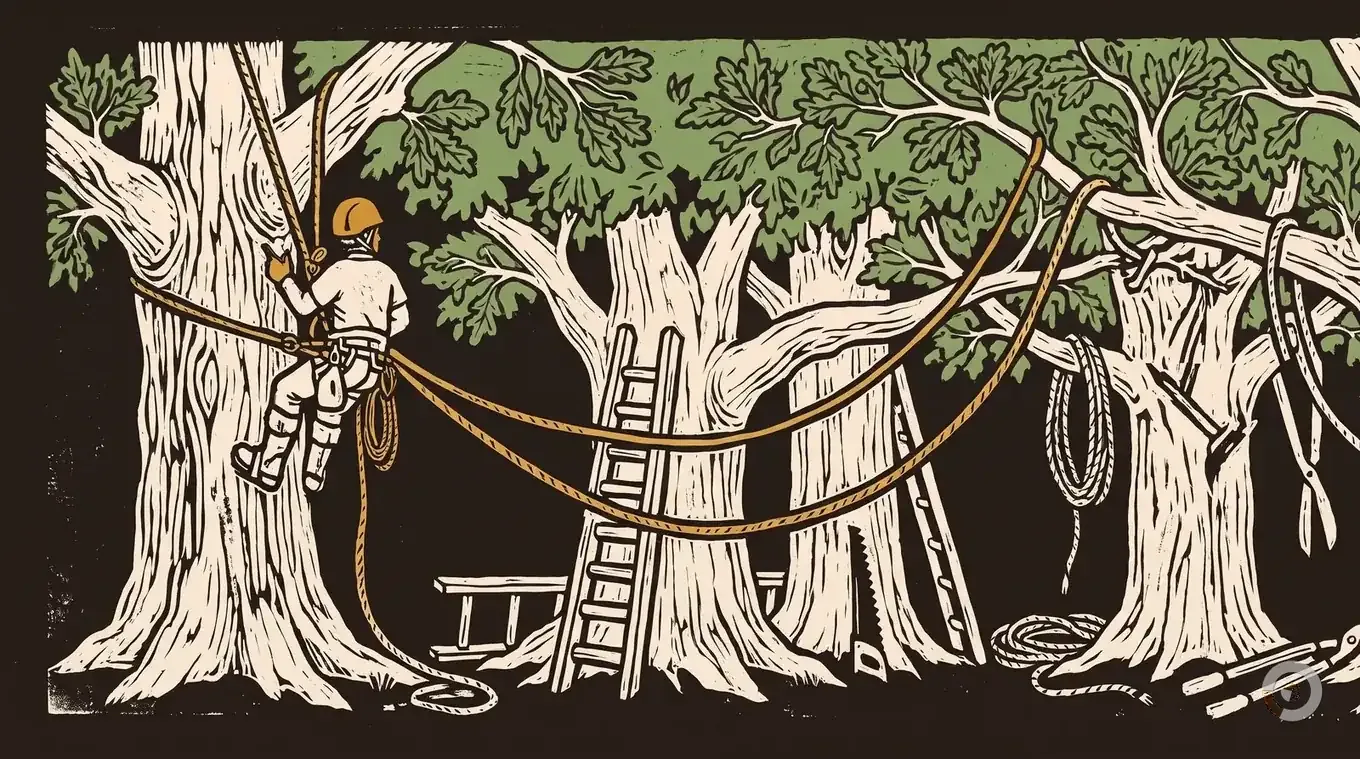
Three policies, doing three different jobs
| Policy | Covers | Who asks for it |
|---|---|---|
| General liability | Damage the crew causes to your property | Every client; commercial clients contractually |
| Workers' compensation | Injury to the crew, on your property | The one that protects the homeowner most |
| Inland marine | The company's own saws, chipper and grinder | The lender, and the owner after a theft |
Watch
Why workers' compensation dominates the premium
Workers' compensation is rated as a rate per $100 of payroll in an occupational class, and tree work sits in one of the most expensive classes in the schedule because the injuries are severe rather than frequent — falls from height, chainsaw lacerations, struck-by events.
That means the premium scales directly with what you pay people. Federal data puts the annual mean wage for tree trimmers and pruners at $55,970 across 55,160 workers (BLS OEWS, May 2025) — so a three-person crew is carrying a comp bill computed against roughly $168,000 of payroll before overtime.
Sound
What actually moves the premium
- Payroll size — the direct multiplier.
- Claims history, expressed as an experience modifier that follows the business for years.
- Whether the crew climbs, and whether they work near energised conductors.
- A documented safety programme and training records.
- Subcontractor certificates — uninsured subs get added to your payroll at audit.
The fourth and fifth are the two most owners neglect, and they are the two that reliably reduce the bill. Credentials help here too — see ISA certification.
How a homeowner verifies it
Two checks. Ask for the certificate of insurance to be sent to you by the agent or insurer directly, not forwarded as a photo — a certificate is trivially edited in a phone gallery. Then confirm the policy period covers the date of your job, not last year.
After a storm this matters more, not less; the storm-chaser checklist is in emergency tree removal.
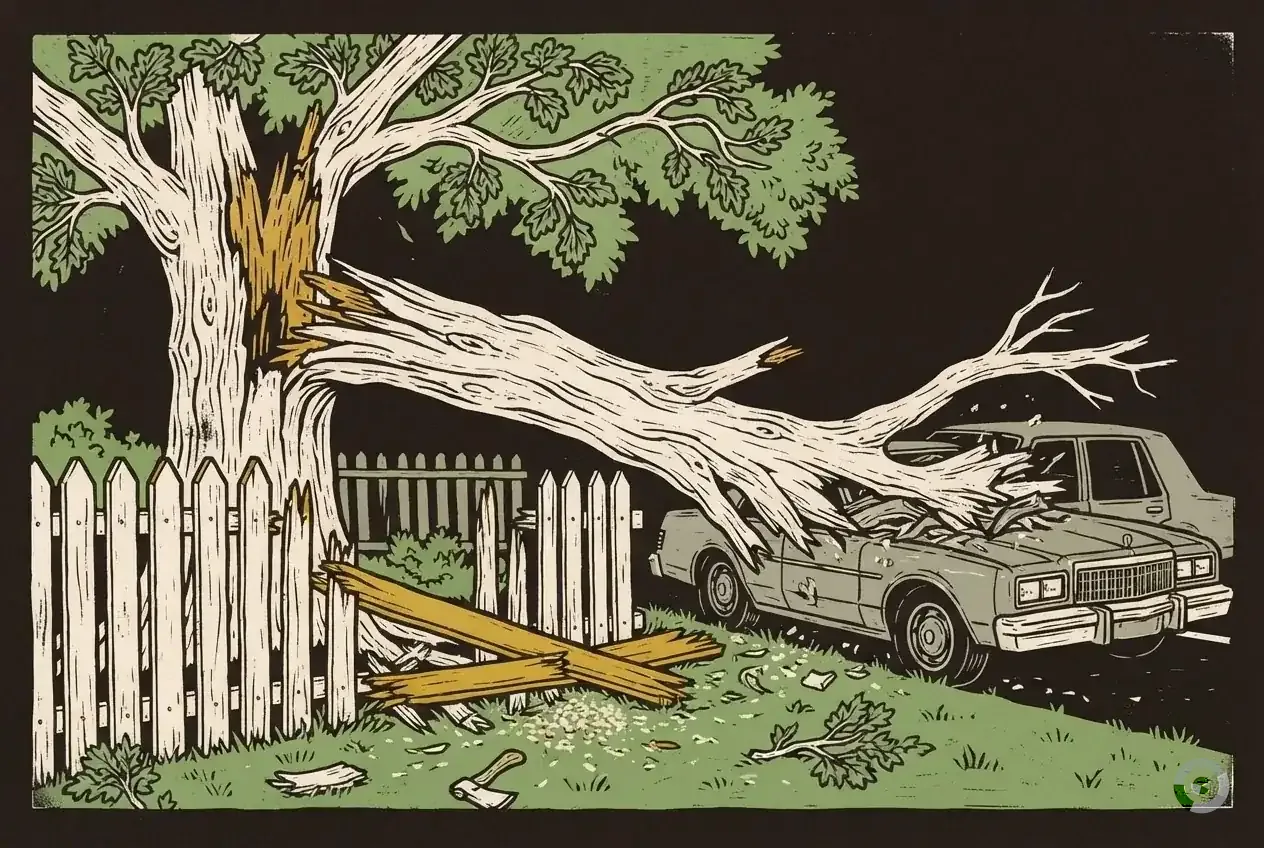
Where it lands in your price
On this site, insurance lives inside the 1.55× loading applied to the BLS wage to get $41.71 per crew-member hour, and inside the 1.6–2.1× bid multiplier on top. That is why an uninsured operator can quote a third under a legitimate one and still eat — they have removed the largest cost, and transferred the risk to you.
The full model is in the removal cost guide, and the same arithmetic from the owner's side is in starting a tree service.