Stump removal cost, per inch and per hour
Updated 2026-09-04 · 8 min read · Removal & cost
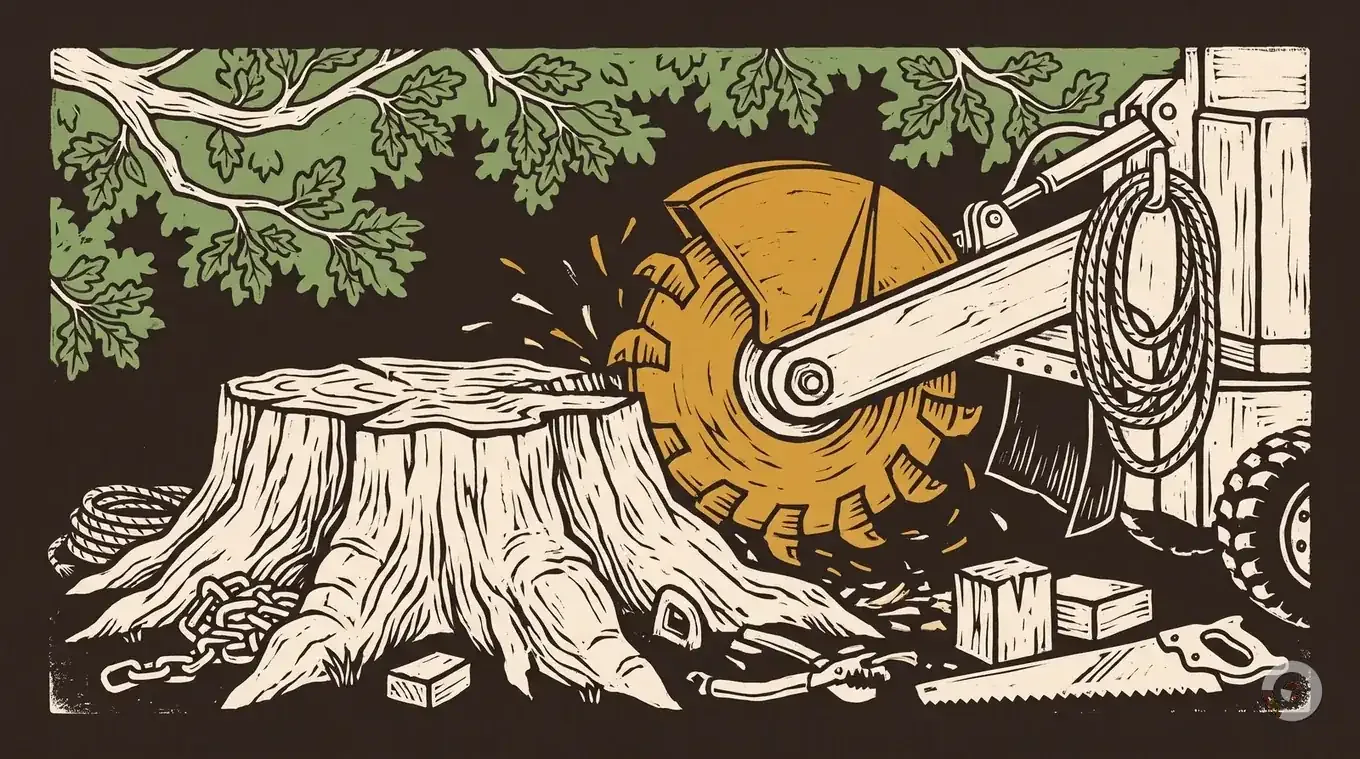
Two different jobs
| Feature | Grinding | Grubbing / excavation |
|---|---|---|
| Machine | Stump grinder | Excavator or backhoe |
| What is left | Chips in a shallow crater | An open hole to backfill |
| Typical depth | 4–18 in below grade | Whole root plate |
| Relative cost | 1× | 3–6× |
| Good for | Lawn, mulch bed, mowing | Hardscape, foundations, replanting |
Sound
How grinding is priced
The industry convention is per inch of stump diameter measured at ground level, with a minimum charge that exists because mobilising the machine costs the same for one stump as for six. The diameter is measured across the widest point including the root flare — which is why the number on the invoice is often bigger than the number you eyeballed from the trunk.
Underneath, the arithmetic is still crew hours. At a loaded $41.71 per crew-member hour derived from the BLS hourly mean of $26.91, a two-person grind crew plus the machine runs to a familiar per-inch rate once the minimum is spread over the job. Run yours through the grinding calculator.
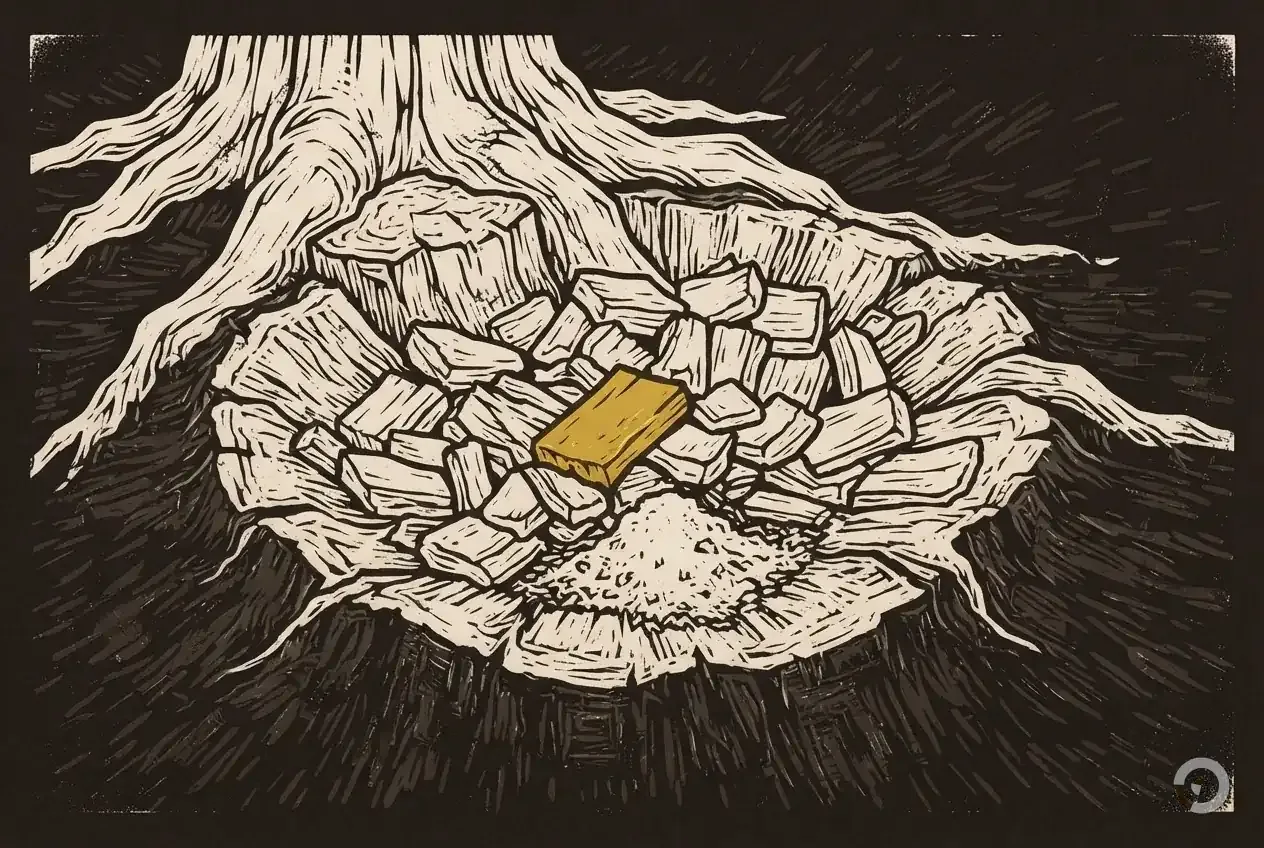
Depth decides the price
Grinding is sold by depth as well as diameter, and the depths are not interchangeable:
4–6 inches
Enough to mow over. The cheapest finish and the most common.
8–12 inches
Enough for turf to establish properly and for a mulch bed to look level.
12–18 inches
What you need if a new tree is going nearby, and roughly where the price stops being linear.
Below 18 inches
You are paying grinder rates for excavation work. Ask for a machine instead.
Watch
The chips problem nobody quotes for
A ground stump produces far more volume than the stump occupied — wood chips fluff. A 24-inch stump ground to a foot will typically fill the crater and mound over it. That mound settles, sometimes a lot, and grass will not grow in fresh chip.
You have three options and all three cost something: leave the mound and top it with soil in a year, have the crew haul the chip (a disposal line), or spread it as mulch elsewhere on the property. Work out how much you are dealing with in the chip calculator before you decide.
Buy it on the same visit
The single largest saving available on a stump is timing. Grinding bought as part of the removal shares the mobilisation with the removal; grinding bought three weeks later pays for its own trip. That is usually the difference between a minimum-charge job and a per-inch job, and it is the reason the removal calculator treats the stump as a checkbox rather than a separate quote.
Sources
- BLS OEWS May 2025 · 37-3013 Tree Trimmers and Pruners · hourly mean $26.91retrieved 2026-09-04
- BLS OEWS May 2025 · 37-3013 · hourly 10th percentile $18.24, 90th percentile $38.61retrieved 2026-09-04