How much mulch, and how deep
Section: Pruning & care
Pre-filled with a realistic job. Change any input and the figure updates as you type — nothing is sent anywhere, and Print gives you a clean sheet without the buttons.
- Area covered160.0 sq ft
- Cubic feet40.0
- Cubic yards to order1.48
- Equivalent 2 cu ft bags20
Two to four inches, and not against the trunk
| Depth | Effect | Verdict |
|---|---|---|
| 1 in | Dries out, weeds through | Too thin to work |
| 2–4 in | Holds moisture, moderates soil temperature, suppresses weeds | The target |
| 5–8 in | Excludes oxygen, roots grow up into the mulch | Too deep |
| Against the trunk | Bark stays wet, decay and girdling roots | Actively harmful |
Stop
Arborist chip is the good stuff, and it is usually free
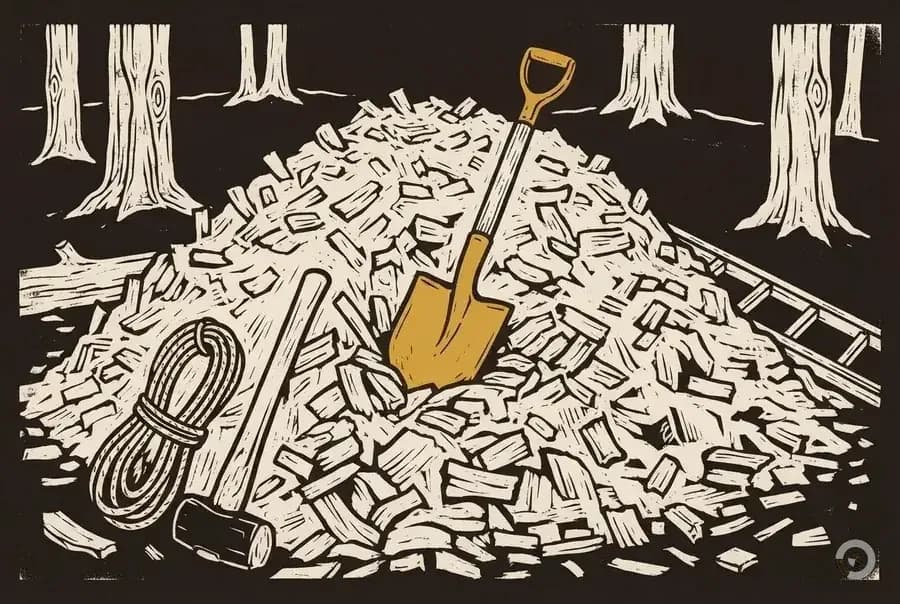
Fresh arborist chip — the mixed wood, bark and leaf that comes out of a chipper — is excellent tree mulch and crews are frequently glad to drop a load rather than pay to tip it. Ask the crew on your street. Use it on beds and rings, not dug into planting holes, where the nitrogen draw of decomposing wood is a genuine problem.
If the chip is coming from your own stump grinding, size the mound with the grinding calculator — it estimates the cubic yards that job will leave.
The arithmetic, if you want to check it
Area in square feet, multiplied by depth in inches, divided by 324, gives cubic yards. The 324 is 27 cubic feet per cubic yard times 12 inches per foot. A standard bagged product is 2 cubic feet, so a cubic yard is thirteen and a half bags — which is why bulk delivery wins above about two yards.
Sources
- BLS OEWS May 2025 · 37-3013 · the crews producing the chip this calculator sizesretrieved 2026-09-04