Feeding a tree: deep injection or the surface?
Updated 2026-10-18 · Pruning & care
Surface feeding with mulch
Best overall
Feeder roots are concentrated in the top 6 to 18 inches. Surface application plus organic mulch reaches them and improves the soil.
Deep root injection
Best in compacted soil
Where soil is compacted or under paving, injection relieves compaction and places material past the hard layer.
Mulch, and a soil test first
Best value
Most declining trees are short of water, air or root room — not fertilizer. Feeding a stressed tree can make it worse.
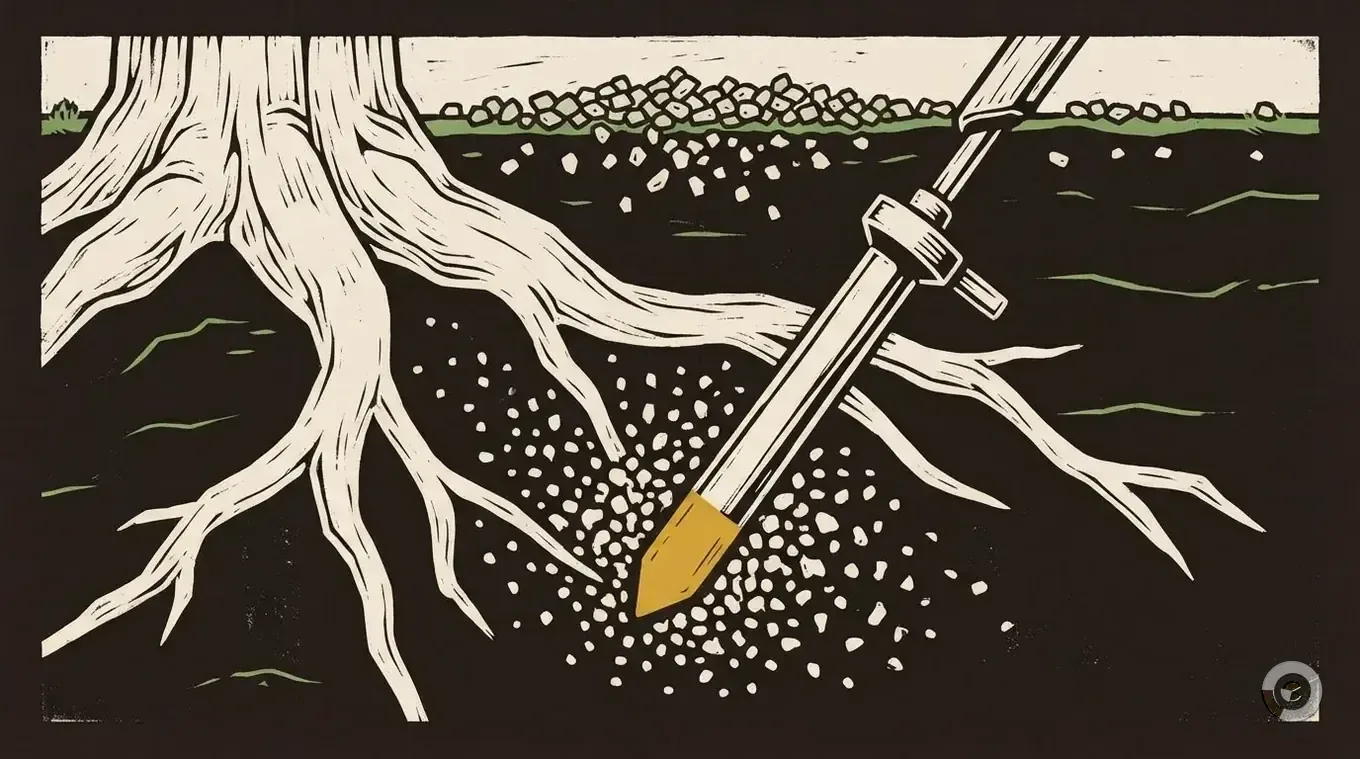
Our pick: Surface feeding and mulch
| Criterion | Deep root injection | Surface feeding and mulch |
|---|---|---|
| Reaches feeder roots | Partly — often below them | Yes |
| Relieves compaction | Yes, locally | Slowly, via mulch |
| Improves soil structure | No | Yes, over years |
| Works under paving | Yes | No |
| Cost | Higher — equipment and labour | Low |
| Risk of over-feeding | Real | Real |
| Needs a soil test first | Yes | Yes |
Where the roots actually are
A mature tree's root system is a wide shallow plate, not a mirror of the canopy. Fine feeder roots concentrate in the upper soil where oxygen is, and spread outward past the drip line. That single fact reorders the whole comparison: the target zone is broad and shallow, so broad and shallow methods have the advantage. When to feed at all, and why the soil test comes first, is in the tree fertilization schedule.
Sound
What usually works better, and costs less
Two to four inches of coarse organic mulch over as much of the root zone as you can manage, pulled back clear of the trunk. It moderates soil temperature, holds moisture, suppresses competing turf, and feeds the soil biology slowly as it breaks down. Arborist chip is ideal and is often free from a crew working your street.
Size the area and depth in the mulch calculator — and note the depth discipline there, because a mulch volcano is worse than no mulch at all.
Diagnose before you feed
Fertilizer solves a nutrient deficiency. Most urban tree decline is not a nutrient deficiency — it is compaction, drought, root severance from a trench, grade change, girdling roots, or a pest. Feeding a tree that is short of water or root room pushes growth the tree cannot support.
Watch