White Oak
Quercus albaUSDA 3b–8b
Updated 2026-10-18 · Species & health
- Mature height60–100 ft
- Mature DBHOld trunks to 72 in
- Canopy spread50–80 ft
- Growth rateSlow
- Firewood26.5–29.1 MBTU / cord
Habit, and why removals cost what they do
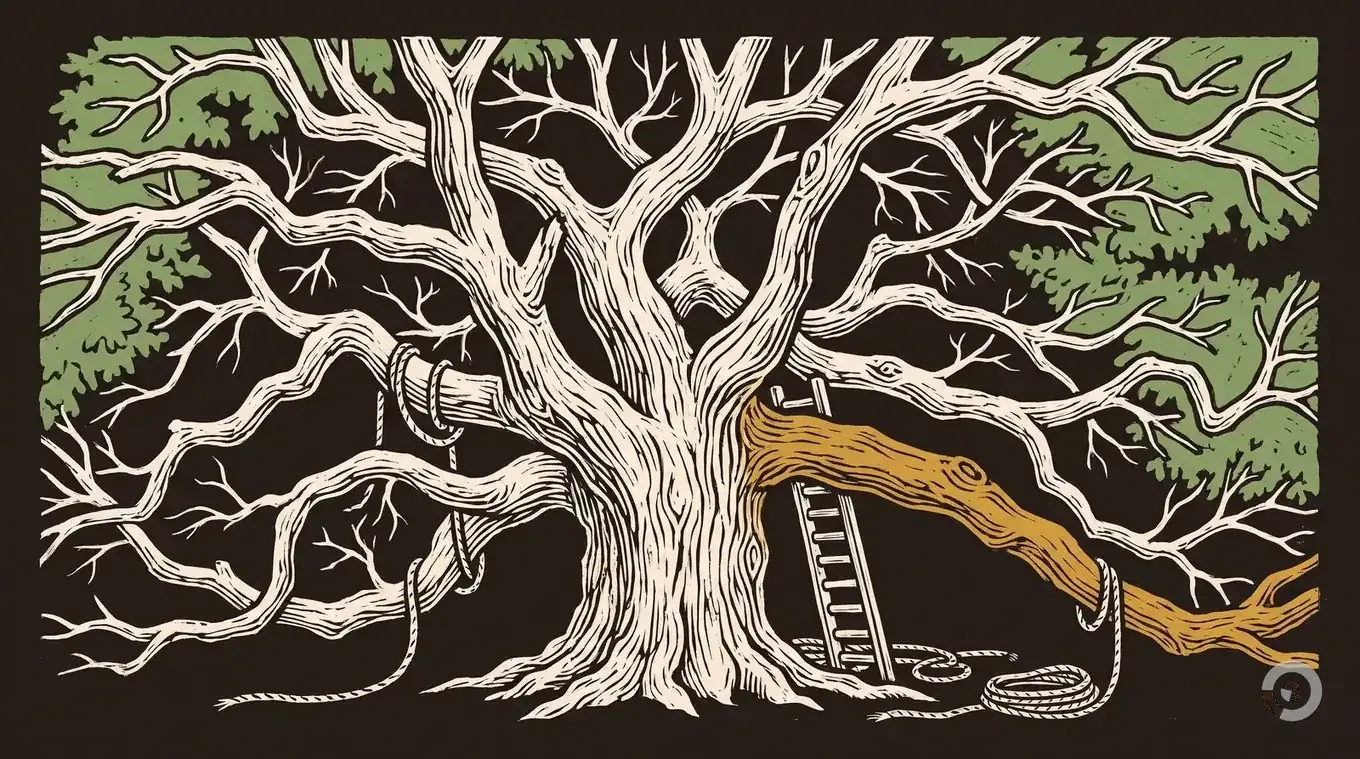
White oak spreads almost as wide as it grows tall, with heavy horizontal limbs starting low. That is a beautiful shade tree and an expensive removal: a lot of heavy wood, much of it over whatever is underneath, and very little of it droppable. A mature specimen is routinely a rigging job or a crane job.
It is also why the appraised value is high — trunk area drives the trunk formula, and a 40-inch stem is a very large number.
The pruning window is not optional
Oaks have oak wilt, a vascular fungus spread between trees underground through root grafts and between stands by sap beetles attracted to fresh wounds, with oak bark beetles also known to carry it. Wisconsin's extension service says sap beetles can visit a wounded oak within ten minutes of the cut, which is why the pruning season is the whole of the prevention.
Stop
White group vs red group
| Feature | White group (incl. Q. alba) | Red group |
|---|---|---|
| Leaf lobes | Rounded | Pointed, bristle-tipped |
| Acorn matures in | One season | Two seasons |
| Oak wilt outcome | Slower; bur and swamp white oaks can live several years | Dies within about a month of wilting |
Knowing which group you have changes the urgency completely. A wilting red oak is an emergency for the whole street; a white oak with a dead limb is a monitoring job.
As firewood, and as a stump
White oak is near the top of the heat table at 26.5 to 29.1 million BTU per cord across the Illinois and Utah State extension tables, and it is also among the slowest to season; Cornell extension says oak can take two years or more. See the BTU chart and measure what you bought in the cord calculator.
Watch
Sources
- UF/IFAS Extension ST541 — Quercus alba, white oak: height 60–100 ft, spread 50–80 ft, zones 3B–8B, trunks can be six feet in diameterretrieved 2026-10-18
- University of Wisconsin-Madison Division of Extension — Oak wilt: sap beetles reach a fresh wound within 10 minutes; cover growing-season wounds immediatelyretrieved 2026-10-18
- Wisconsin DNR — Oak wilt: red oaks die within about a month of wilting; bur and swamp white oaks live several yearsretrieved 2026-10-18
- University of Illinois Extension — Firewood: burning safety (million BTU per cord)retrieved 2026-10-18
- Utah State University Extension — Wood Heating, Table 1 (heat per cord of dry wood)retrieved 2026-10-18
- BLS OEWS May 2025 · 37-3013 · hourly mean $26.91 (the crew rate behind an oak removal)retrieved 2026-09-04