Oak wilt: what treatment can and cannot do
Updated 2026-10-18 · 10 min read · Species & health
What it is
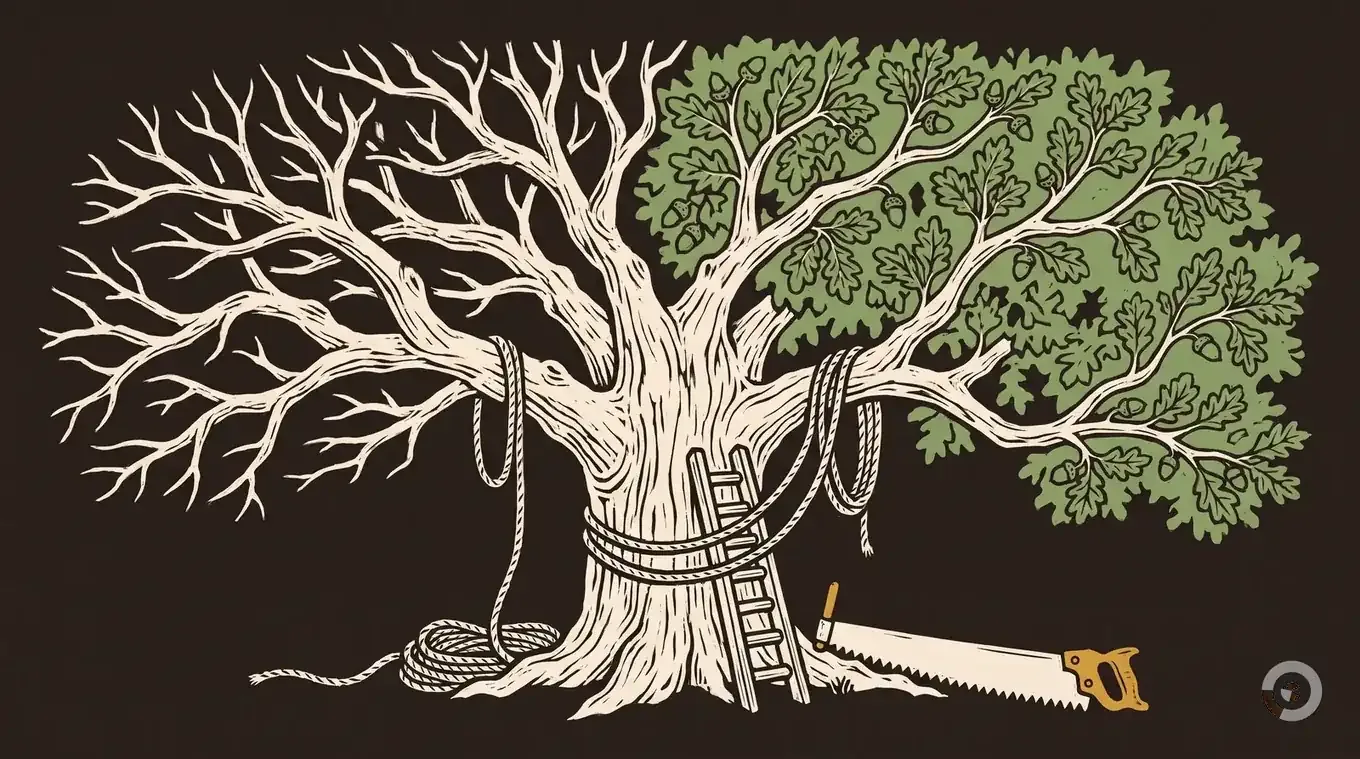
A fungal pathogen, Bretziella fagacearum, that colonises the water-conducting tissue. The tree responds by walling off vessels, which accelerates the blockage it was trying to contain. Wisconsin DNR's diagnostic detail is worth knowing: infected leaves turn dull green to bronze and drop while still partly green, unlike normal leaf fall.
Two ways it travels, and they need different answers
| Route | How it works | What stops it |
|---|---|---|
| Root grafts | Adjacent oaks fuse roots underground; the fungus walks between them | Severing the grafts — a trench |
| Beetles | Sap beetles feed on fungal mats, then visit fresh wounds on healthy trees; oak bark beetles also carry it | Not wounding oaks in the growing season |
Root grafting is the reason oak wilt kills in expanding circles rather than at random. Beetle spread is the reason it appears somewhere new — and it is entirely under your control, because the beetles need a fresh wound to land on. Wisconsin's extension service says sap beetles can visit a wounded oak within ten minutes of the cut, and Wisconsin DNR puts the highest-risk period at April through July, when beetles are abundant and fungal mats are fresh.
Stop
Red oaks die; white oaks often linger
Oaks in the red group — pin, northern red, black, scarlet — lose most of their leaves and die within about a month once wilting shows, according to Wisconsin DNR. In the white group, bur and swamp white oaks live several years after symptoms appear, and white oak progresses more slowly still and may survive infection. Same fungus, very different prognosis, and the group decides whether you are managing a fire or a slow leak. Specs for the white oak side are on the oak species page.
Trenching is the real treatment
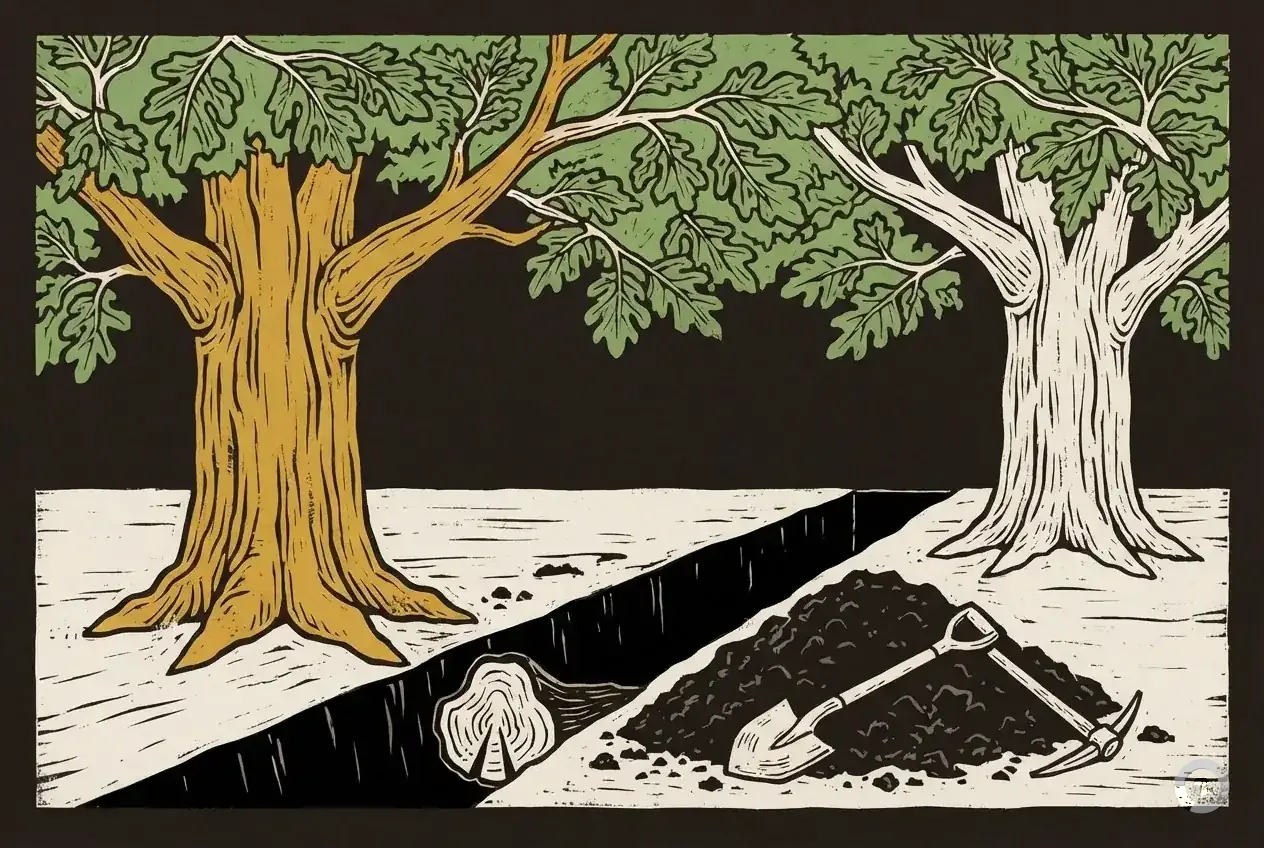
Because most of the killing happens through root grafts, the intervention that actually stops a pocket is mechanical: a trench cut deep enough to sever the grafts, placed outside the symptomatic trees, before the next season's spread. It is a machine job, it damages lawn, and it works.
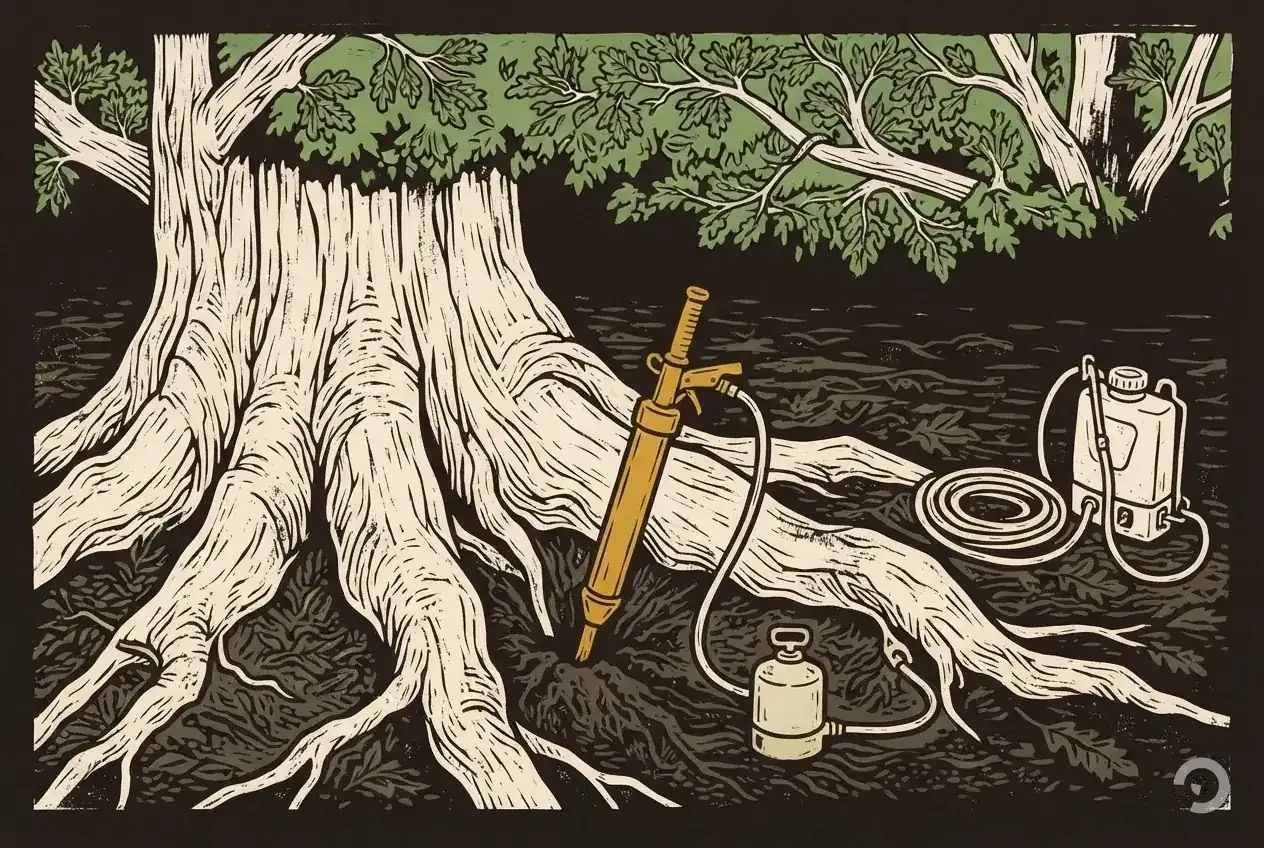
Fungicide injection has a real but narrow role: as a preventive on high-value uninfected trees inside a known pocket, injected at the root flare. On a red oak already showing symptoms it is money spent late. Weigh it against what the tree is worth in the appraisal calculator.
The firewood problem
The fungus survives in wood from infected trees, and fungal mats form under the bark of trees it has killed. Moving that wood moves the disease. Wisconsin DNR's advice is to keep firewood local and cover it with 4 mil plastic until the bark is loose; wood with loose bark, and wood from healthy trees with no symptoms, is not a risk.
If you are stacking oak for heat from a healthy tree, that is a different question entirely and the numbers are in the firewood BTU chart and the cord calculator.
Watch
Sources
- University of Wisconsin-Madison Division of Extension — Oak wilt (Bretziella fagacearum): sap and oak bark beetle vectors, root grafts, sap beetles at a fresh wound within 10 minutes, cover growing-season wounds immediatelyretrieved 2026-10-18
- Wisconsin DNR — Oak wilt: red oaks die within about a month of wilting, bur and swamp white oaks live several years, white oaks may survive; highest risk April–July; firewood under 4 mil plastic until the bark is looseretrieved 2026-10-18