Dutch elm disease, and why sanitation is the treatment
Updated 2026-10-18 · 9 min read · Species & health
What you actually see
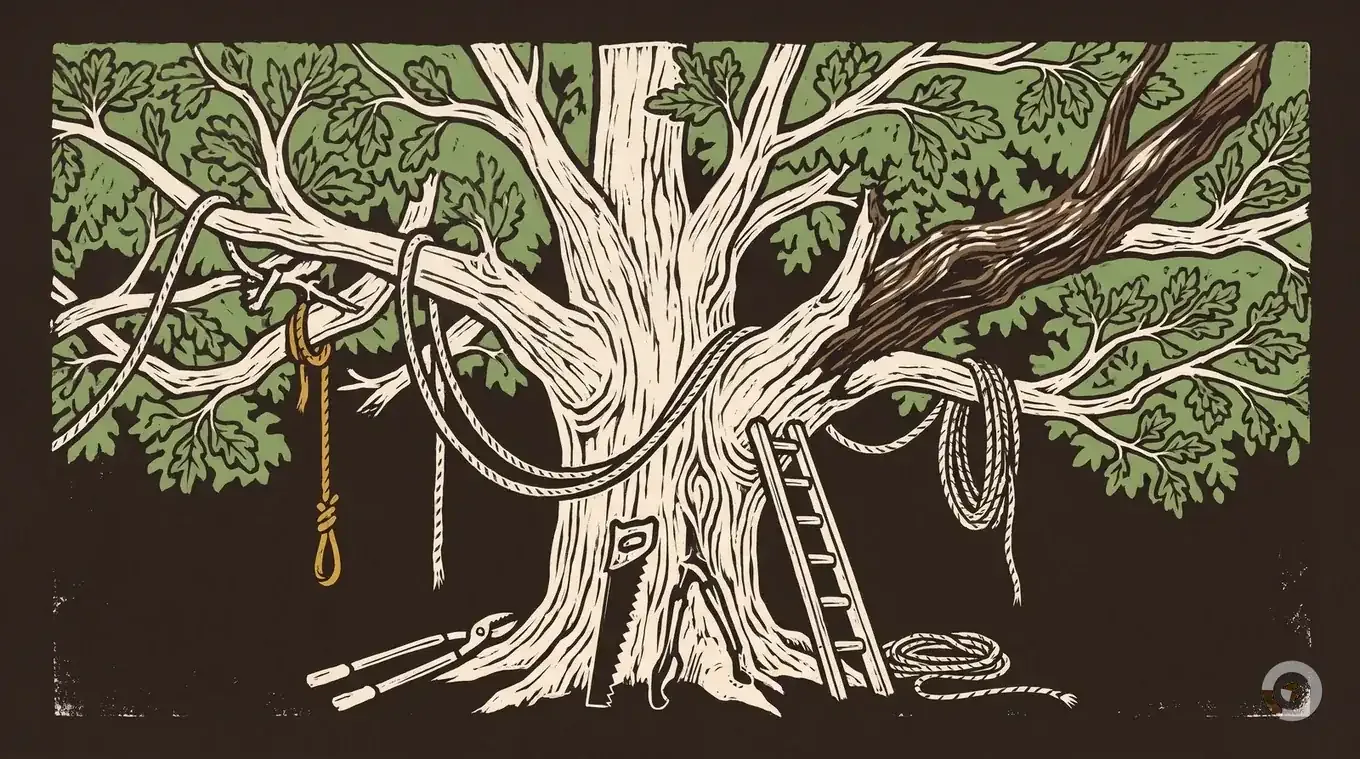
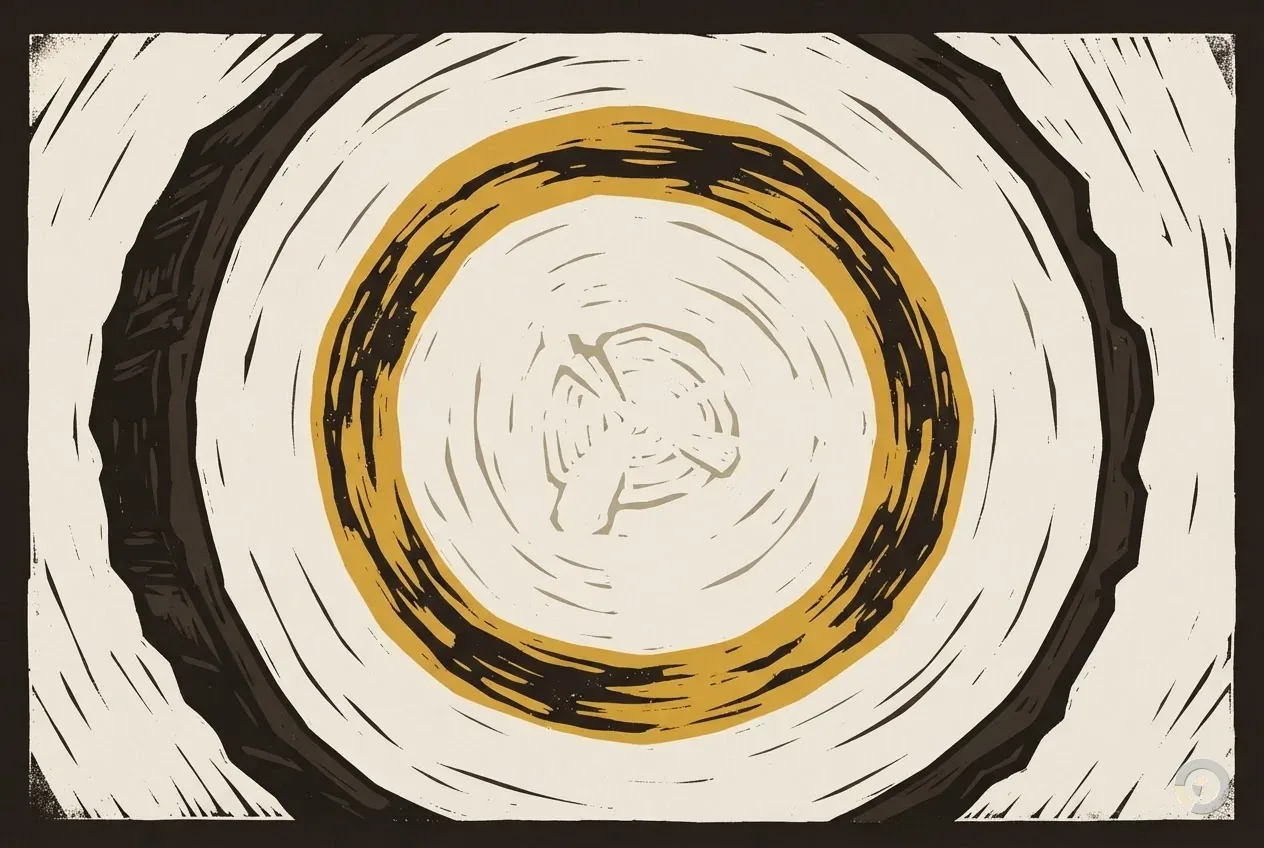
The first symptom is flagging: one branch whose leaves yellow, wilt and go brown while the rest of the crown is fine. Peel the bark on a wilting twig and the sapwood underneath shows brown streaking in a ring — the fungus in the vessels. Wisconsin's extension service describes exactly this pattern, and the streak is what a lab looks for when a sample is sent in.
Sound
Beetles and root grafts
| Route | Mechanism | The counter |
|---|---|---|
| Elm bark beetles | Breed under the bark of dying elms, emerge carrying spores, feed in healthy crotches | Destroy breeding material; do not wound elms in the growing season |
| Root grafts | Neighbouring elms fuse roots; the fungus moves tree to tree underground | Sever the grafts before removing the infected tree |
The two routes explain the two rules that look arbitrary from outside: why elm pruning is confined to the dormant season, and why a street can lose trees in a line rather than at random. The pruning window is in the pruning calendar, where the elm row, like the oak and ash rows, is empty all summer.
Sanitation is the programme
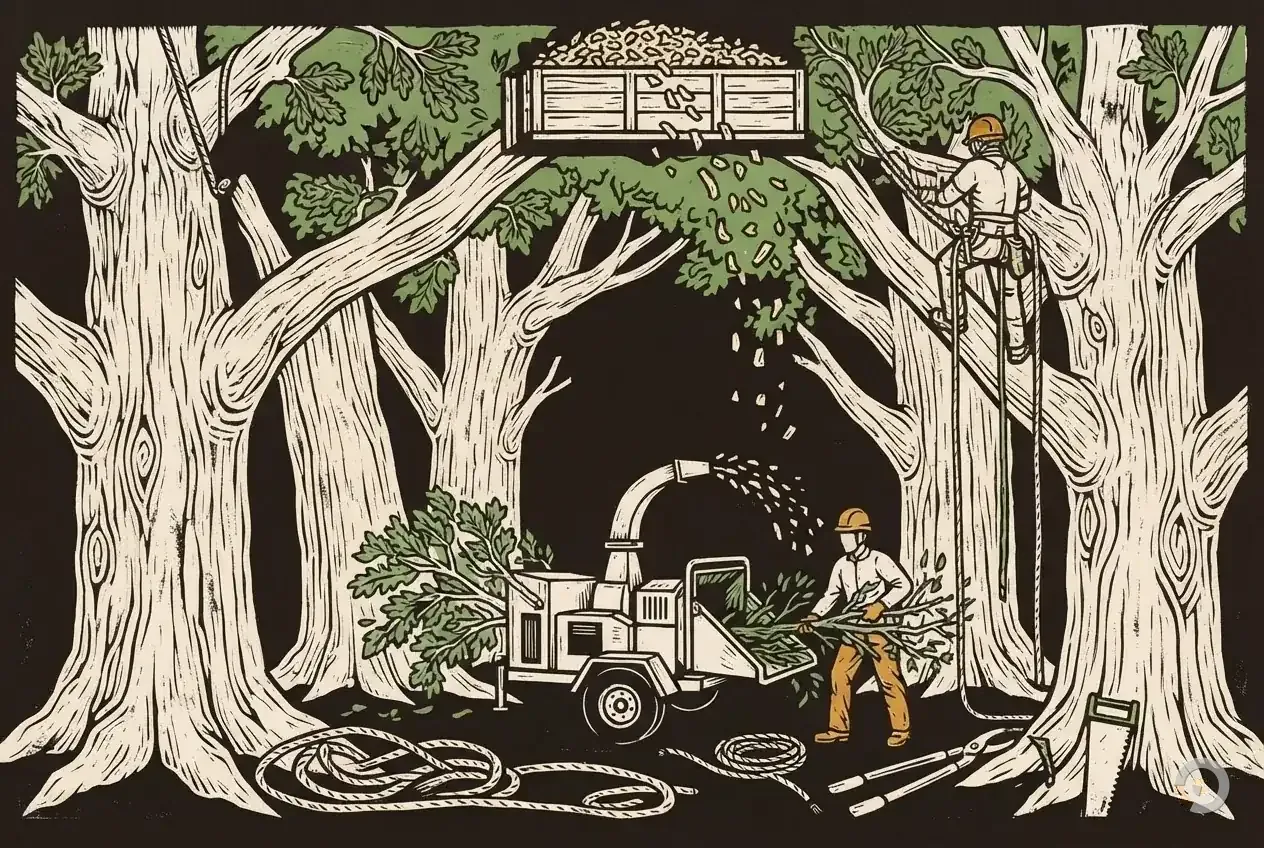
Everything effective is about removing breeding habitat before the beetles emerge. That means dead and dying elms come down promptly rather than next season, and the wood is chipped, burned or debarked rather than stacked. An elm log in a woodpile is a beetle nursery with a roof.
This is why municipal elm programmes are structured as surveys and removals rather than treatments, and why a single neglected tree can undo a street's worth of care. Removal pricing for a large elm runs through the same crew-hour model as everything else — price it here.
Where injection fits
Systemic fungicide injection is a real tool with a narrow brief: preventive protection of a high-value, currently healthy elm. Wisconsin's extension service names propiconazole or thiabendazole, applied every two years by a certified arborist trained in injection. It is of limited use in a tree that is already infected, and it is not a cure for a tree already streaking through the main stem, and it does nothing about the beetle population next door.
On an early single flag in a valuable tree, therapeutic pruning plus injection is sometimes attempted. The extension guidance is to cut six feet below any symptoms, remove and bury or burn the wood, and disinfect tools between cuts with 10% bleach or 70% alcohol. It is a genuine coin flip, and the honest framing is that you are buying a chance, not a fix.
Replanting after an elm
The lesson of the elm era is monoculture, not elms. Streets planted with one species lost everything at once; the same thing happened again with ash and emerald ash borer. Modern disease-tolerant elm cultivars exist and are worth planting — as part of a mix, not as the new single species.
If the gap is going to hold a large tree again, check the mature dimensions first on oak or maple, and confirm removal rules for the old tree in the permit guide.