A twelve-month pruning calendar
Updated 2026-10-18 · 8 min read · Pruning & care
The grid
| Species | J | F | M | A | M | J | J | A | S | O | N | D |
|---|---|---|---|---|---|---|---|---|---|---|---|---|
| Oak (Quercus) | J: prune | F: prune, best month | M: avoid | A: avoid | M: avoid | J: avoid | J: avoid | A: avoid | S: avoid | O: avoid | N: prune | D: prune |
| Elm (Ulmus) | J: prune | F: prune | M: avoid | A: avoid | M: avoid | J: avoid | J: avoid | A: avoid | S: avoid | O: avoid | N: prune | D: prune, best month |
| Maple (Acer) | J: prune | F: prune, best month | M: prune | A: avoid | M: avoid | J: avoid | J: prune | A: prune | S: avoid | O: avoid | N: avoid | D: avoid |
| Ash (Fraxinus) | J: prune | F: prune | M: prune, best month | A: avoid | M: avoid | J: avoid | J: avoid | A: avoid | S: avoid | O: avoid | N: prune | D: prune |
| Apple & pear | J: prune | F: prune, best month | M: prune | A: avoid | M: avoid | J: avoid | J: prune | A: prune | S: avoid | O: avoid | N: avoid | D: avoid |
| Stone fruit (Prunus) | J: avoid | F: avoid | M: avoid | A: avoid | M: avoid | J: prune | J: prune, best month | A: prune | S: avoid | O: avoid | N: avoid | D: avoid |
| Birch & walnut | J: avoid | F: avoid | M: avoid | A: avoid | M: avoid | J: avoid | J: prune | A: prune, best month | S: prune | O: avoid | N: avoid | D: avoid |
| Conifers | J: avoid | F: avoid | M: avoid | A: prune | M: prune, best month | J: prune | J: avoid | A: avoid | S: avoid | O: avoid | N: avoid | D: avoid |
| Palm | J: prune | F: prune | M: prune | A: prune | M: prune, best month | J: prune | J: prune | A: prune | S: prune | O: prune | N: prune | D: prune |
How to read it
Three states, and the empty one is the important one. An empty cell is not "slightly worse" — for oaks and elms it is the window in which a fresh cut is an open invitation to a vector insect, and for the bleeders it is the window in which the tree loses sap it cannot spare.
Deadwood is exempt everywhere. Removing wood that is already dead does not create a wound in living tissue, so it carries no seasonal risk — which is why the objective, not the month, is where any pruning decision starts.
The bleeders
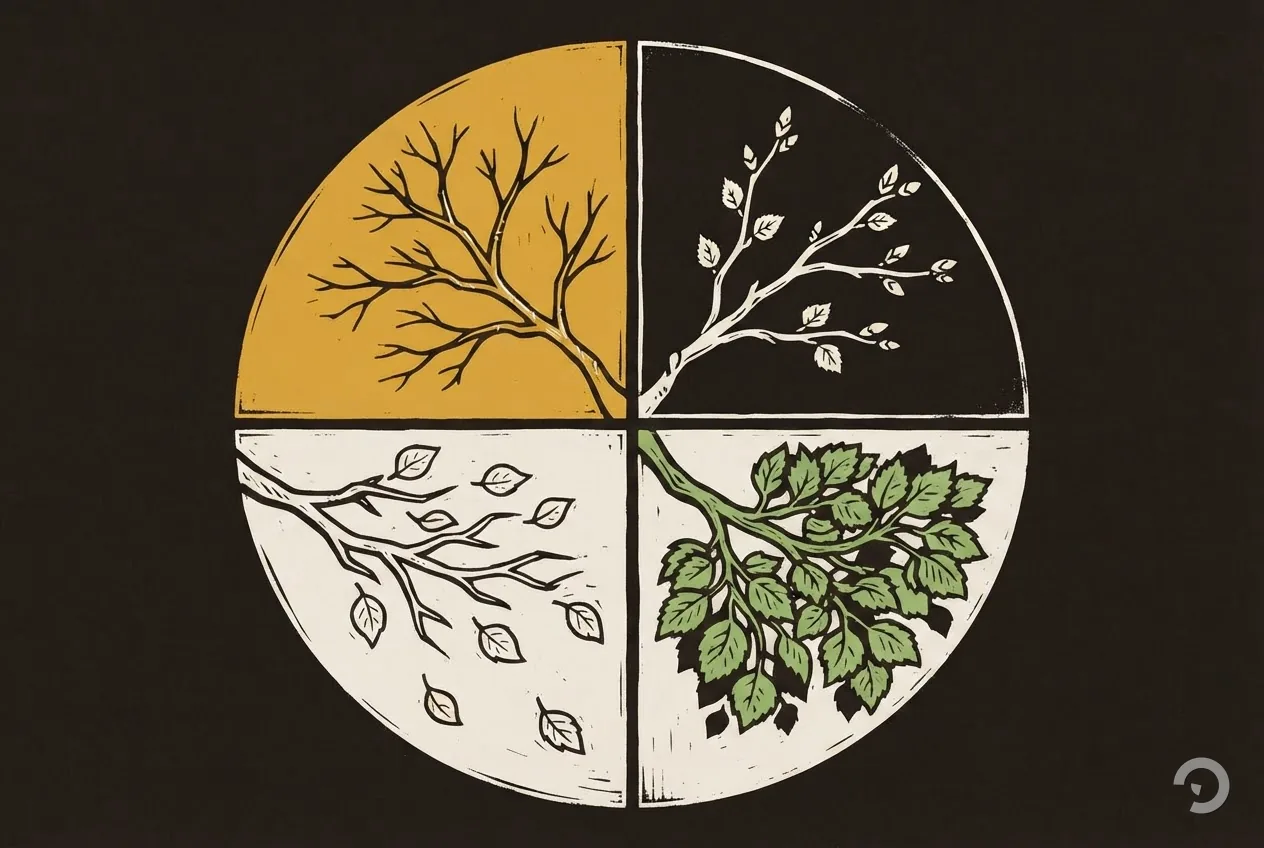
Maple, birch, walnut and elm all run sap heavily in late winter. Cutting them at bud break produces dramatic bleeding. It is largely cosmetic rather than fatal, but it is avoidable: for maple, cut in deep dormancy or wait until midsummer; for birch and walnut, midsummer is the clean answer, which is why their rows sit in July and August rather than February.
Watch
Stone fruit runs backwards
Cherries, plums and their relatives are pruned in summer specifically to avoid silver leaf and bacterial canker, both of which infect through dormant-season wounds in wet weather. That is why the Prunus row is filled in summer and empty all winter, the exact reverse of the oak, elm and ash rows.
Conifers sit in late spring for a different reason again: cutting into the new candle growth while it is still soft gives you a shape; cutting into old wood past the needles gives you a permanent hole.
Palms are the one row filled in every month. Removing a dead frond is not a seasonal decision for the palm; the reasons, and the over-pruning to refuse, are on the date palm page.
Your county overrides this page
The disease windows move with latitude and with the season. State and county extension services publish the current high-risk dates for oak wilt and for elm bark beetle activity, and those dates are the authority — this grid is the pattern, not the permission. The University of Wisconsin's extension article on Dutch elm disease is the shape of the guidance you are looking for locally.
Once the month is settled, price the work in the trimming calculator.
Sources
- University of Wisconsin-Madison Division of Extension — Dutch elm disease: beetle vectors, root grafts, and pruning as a route of spreadretrieved 2026-10-18
- University of Wisconsin-Madison Division of Extension — Oak wilt: prune oaks only in the dormant season when sap and bark beetles are not activeretrieved 2026-10-18
- Wisconsin DNR — Oak wilt: greatest transmission risk April through Julyretrieved 2026-10-18
- UF/IFAS Extension EP443 — Pruning palms: no time of year is better for the palm; remove dead leaves before hurricane seasonretrieved 2026-10-18