Tree trimming cost, by the type of cut
Updated 2026-10-18 · 10 min read · Pruning & care
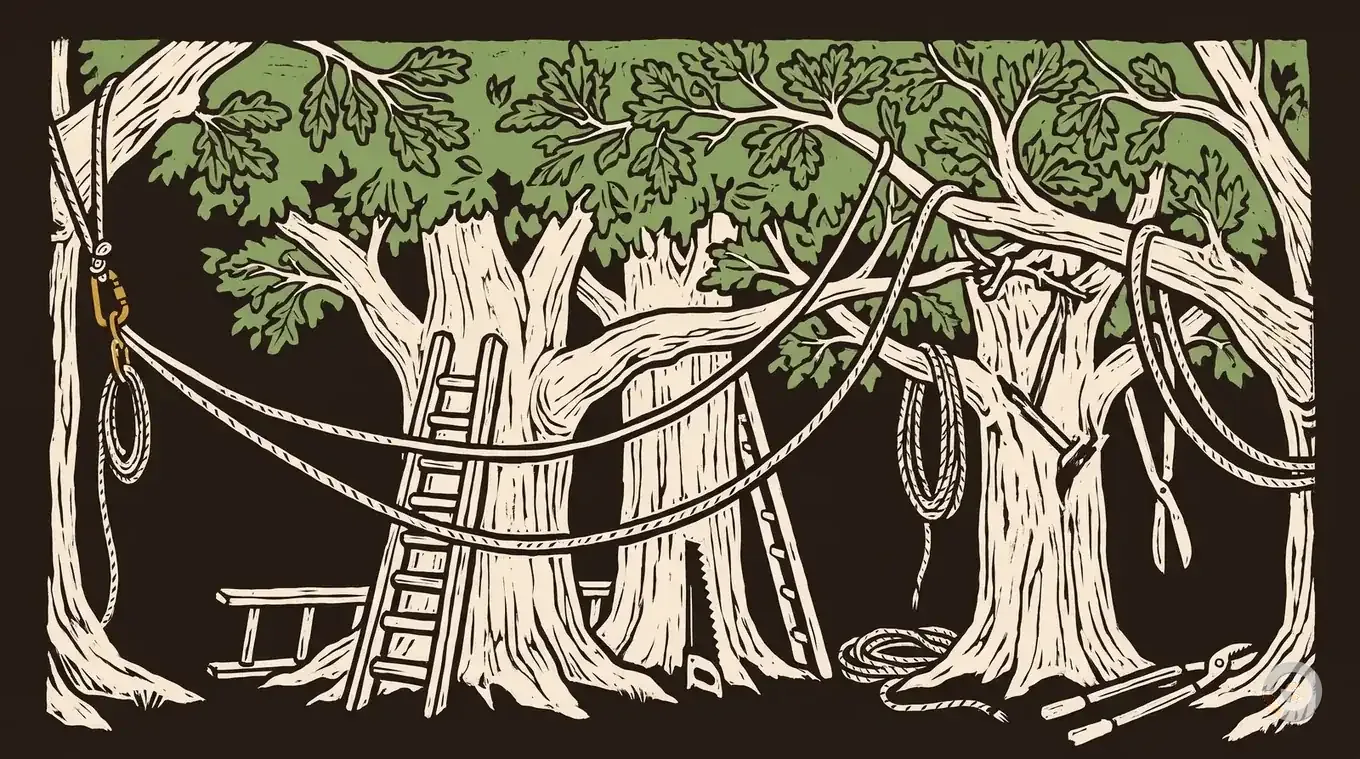
Four different jobs
| Pruning type | What is cut | Relative hours |
|---|---|---|
| Crown cleaning | Dead, dying, diseased and crossing branches only | 1.0× |
| Crown raising | Lower limbs, to clear a roof, path or sightline | 1.1× |
| Crown thinning | Selective live branches, to open the canopy evenly | 1.6× |
| Crown reduction | Leaders shortened back to suitable lateral branches | 2.2× |
The names are not marketing — they are the vocabulary of the ANSI A300 standard, published as one consolidated document since January 2024, which frames pruning by objective and rules out topping and lion's-tailing. A crew that uses the vocabulary is telling you they work to a spec. A quote that says only "trim tree" is telling you the opposite.
What sets the hours
Trimming is priced almost entirely in crew time. The same loaded rate applies as everywhere else on this site: $26.91 hourly mean wage (BLS, May 2025), loaded to $41.71 per crew-member hour, three people, plus the truck. What changes is how long the climber is in the tree.
Three things set that: how much canopy there is, how much of it has to be reached on rope rather than from a lift, and how much material has to come down through a target zone rather than being dropped. A big open oak trimmed from a bucket is cheap per cubic foot of canopy; a medium maple over a conservatory is not.
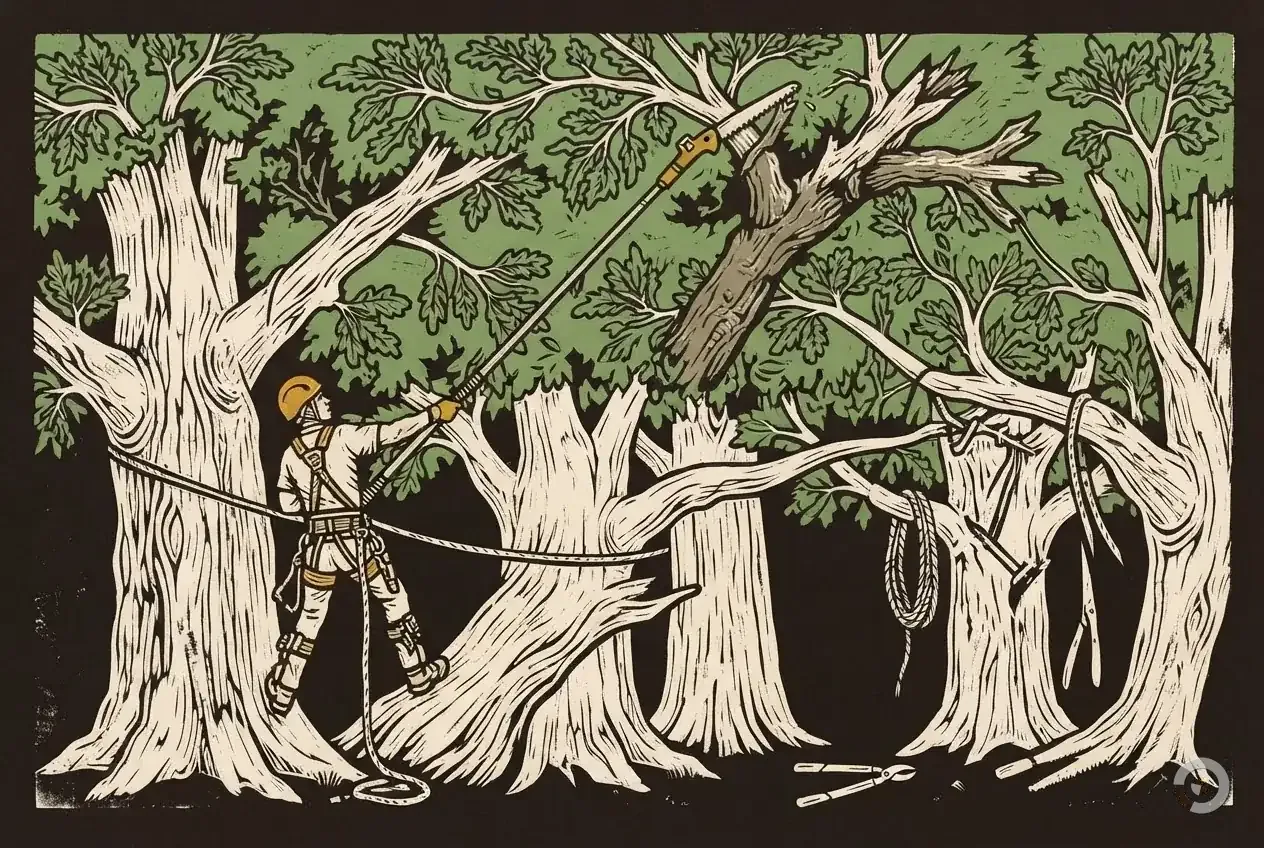
Why topping is never actually cheap
Topping — cutting every leader back to a stub at a uniform height — is fast, which is why it is quoted low. What it produces is a ring of weakly attached water sprouts growing from the cut faces, a decay column running down each stub, and a tree that needs the same work again in three years with a worse structure each time.
Drop zone
Cycle pruning beats crisis pruning
A young tree pruned lightly every three to five years never needs a big reduction, because the structural problems get corrected while the branches are small enough to cut with hand tools. The same tree left alone for twenty years needs a climber, a rigging line and a chipper to fix the same problem.
The season matters as much as the cycle — see when to prune and the month-by-month calendar, which also carries the disease windows you must not cut inside.
Getting a quote you can actually compare
Ask for three things in writing and the quotes become comparable: which pruning type, what the target clearance or reduction is in feet, and whether the work is to A300. Then price the hours yourself in the trimming calculator and see whether the bid sits inside the band.
If the tree has a structural defect rather than a size problem, pruning is the wrong purchase entirely — read cabling and bracing before you spend anything.
Sources
- TCIA — ANSI A300 standards: one consolidated document since January 1, 2024retrieved 2026-10-18
- TCIA — Tree pruning to ANSI standards: no topping or lion's-tailing, no flush cuts, minimise live-wood removal to meet an objectiveretrieved 2026-10-18
- BLS OEWS May 2025 · 37-3013 Tree Trimmers and Pruners · hourly mean $26.91retrieved 2026-09-04
- BLS OEWS May 2025 · 37-3013 · annual mean $55,970retrieved 2026-09-04