Cabling and bracing a weak union
Updated 2026-10-18 · 9 min read · Pruning & care
What it actually fixes
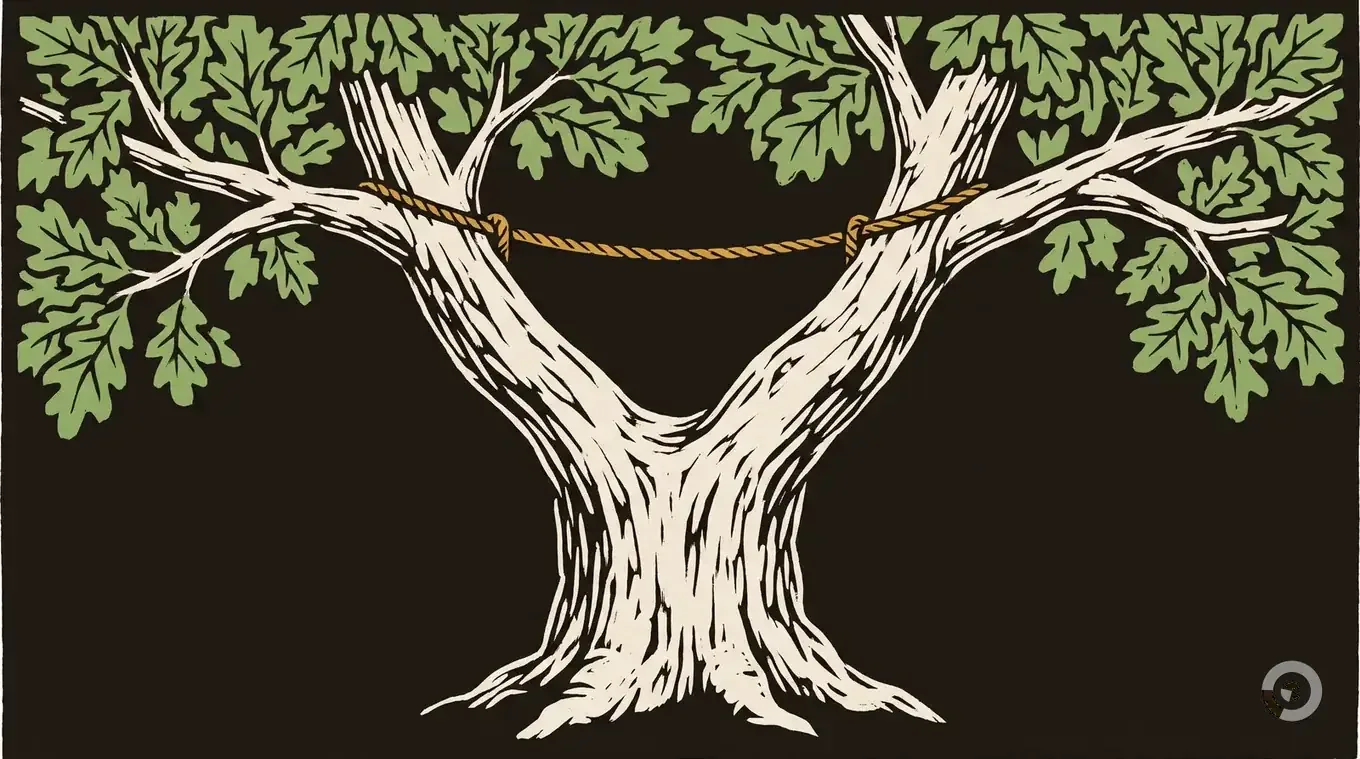
Supplemental support addresses one defect well: a codominant union, where two stems of similar diameter meet and there is not enough branch collar tissue holding them together. Often there is included bark — bark trapped in the join instead of wood — which means the union has almost no mechanical strength and is a wedge being driven apart a little more each year.
Sound
Cable, brace, or both
| System | Where it sits | What it does |
|---|---|---|
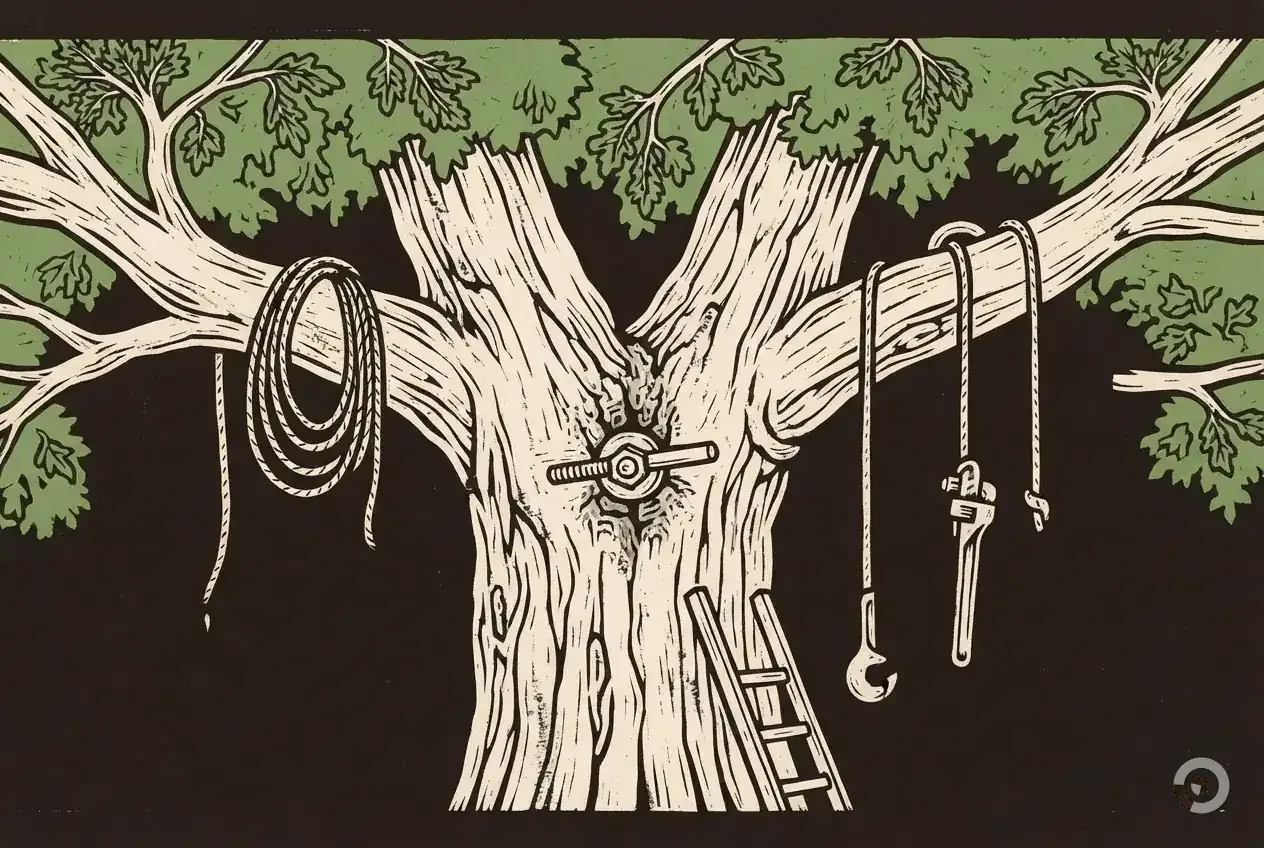
| Static cable | High in the canopy, ~2/3 up from the union | Limits movement; the standard install |
| Dynamic cable | Same position, synthetic and slightly elastic | Allows some sway so the union keeps loading and strengthening |
| Brace rod | Through the stems, at or below the union | Resists the union being pulled apart; used where a crack already exists |
Height matters more than hardware. A cable placed too low is a lever that concentrates load rather than sharing it, and it is the most common installation error on a tree cabled by someone who does not do it often.
What it costs and why
Cabling is a climbing job, so it is priced on the same crew-hour basis as everything else here: the BLS hourly mean of $26.91 for tree trimmers (OEWS, May 2025), loaded to $41.71 per crew-member hour, plus hardware. A single-cable install on an accessible tree is a short morning; a three-cable triangular system in a mature oak with poor access is a full day.
The comparison that matters is against the tree's value, not against zero. Work out what the tree is worth in the appraisal calculator and against the removal cost in the removal calculator. For a specimen shade tree the cable is usually a fraction of either.
The inspection obligation you are buying
A support system is not a fit-and-forget purchase. Hardware corrodes, the tree grows around anchor points, and a cable that has become slack is doing nothing while looking like it is doing something. The A300 support-systems standard says these systems need periodic inspection by an arborist and makes scheduling it the tree owner's job. Inspection is part of the system, and a failed tree with a rusted cable in it is a worse legal position than the same tree with nothing.
Stop
What often works better than hardware
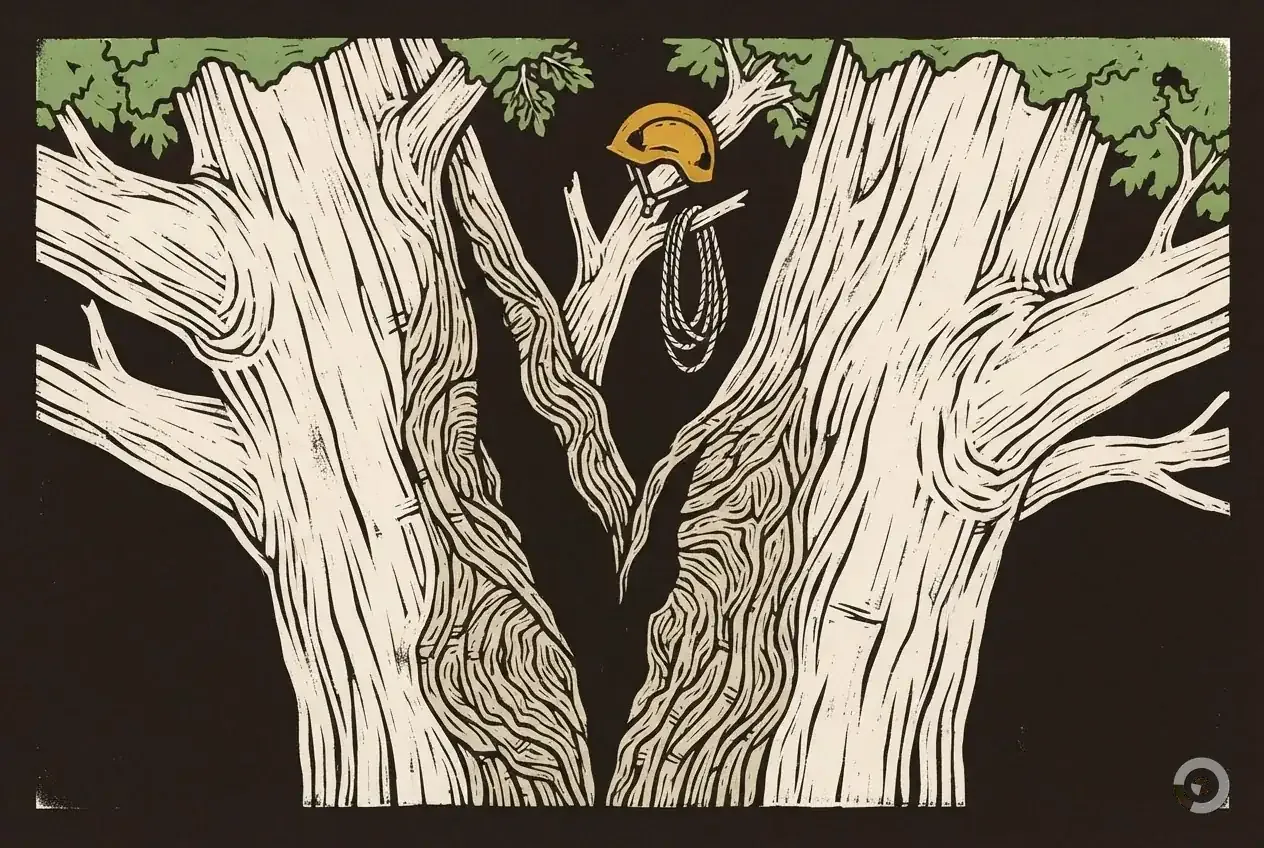
End-weight reduction. Shortening the leaders back to suitable laterals lowers the leverage on the union directly and permanently, needs no inspection schedule, and costs less than a cable system. On many trees it is the correct first purchase, and the cable — if it is still needed — becomes a smaller job afterwards.
Which is right for your tree starts with an honest defect assessment: run the risk form before you call anyone for a cabling quote.