Tree risk: likelihood × consequence
Section: Safety & the trade
Pre-filled with a realistic job. Change any input and the figure updates as you type — nothing is sent anywhere, and Print gives you a clean sheet without the buttons.
Mitigate the target or the defect; re-inspect within a year.
- LikelihoodPossible
- ConsequenceSignificant
- Matrix score6
- Assessed—
Observed defects
Pre-filled with the defects a walk-around should check. Edit them to match this tree, then print.
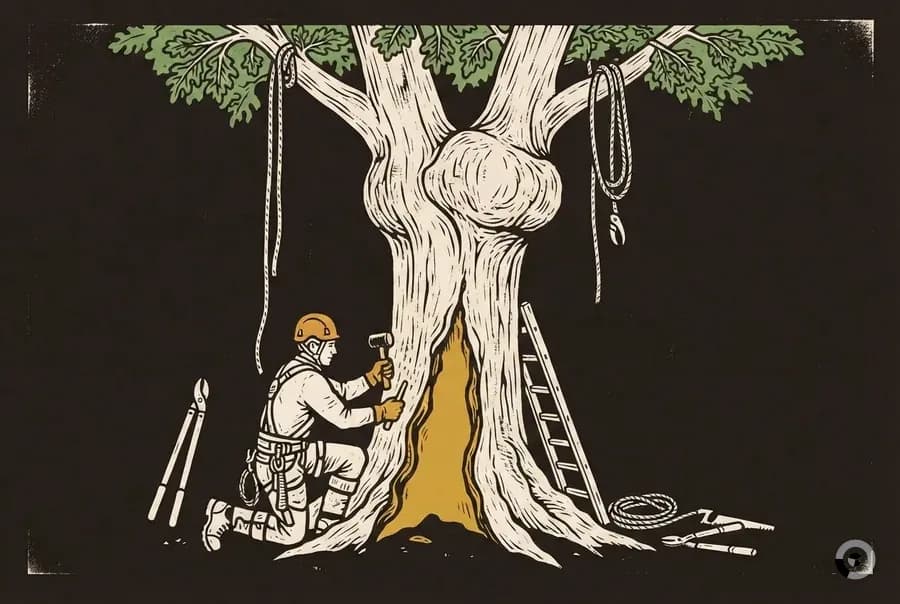
The matrix
| Likelihood ↓ / Consequence → | Negligible | Minor | Significant | Severe |
|---|---|---|---|---|
| Improbable | Sound | Sound | Sound | Monitor |
| Possible | Sound | Sound | Monitor | Monitor |
| Probable | Sound | Monitor | Remove | Remove |
| Imminent | Monitor | Remove | Remove | Remove |
Note what the table does: a severe target on its own does not produce a removal, and a probable failure over nothing does not either. Both sides have to be loaded. That is the discipline the matrix enforces on an anxious walk-around.
Mitigation works on either axis
Because risk is a product, you can lower it from either side. Reduce the likelihood by pruning end weight, installing a support system, or correcting a structural defect. Or reduce the consequence: move the parking space, relocate the play equipment, fence off the drop zone.
Sound
Print it and keep it
A dated assessment is a document, and documents matter twice: insurers frequently treat a known hazardous tree as a maintenance failure, and most tree ordinances require the hazard to be evidenced before an exempt removal. The print button gives you a clean sheet with the defect list you edited and today's date on it.
Drop zone