Emergency tree removal: what the premium buys
Updated 2026-10-18 · 9 min read · Removal & cost
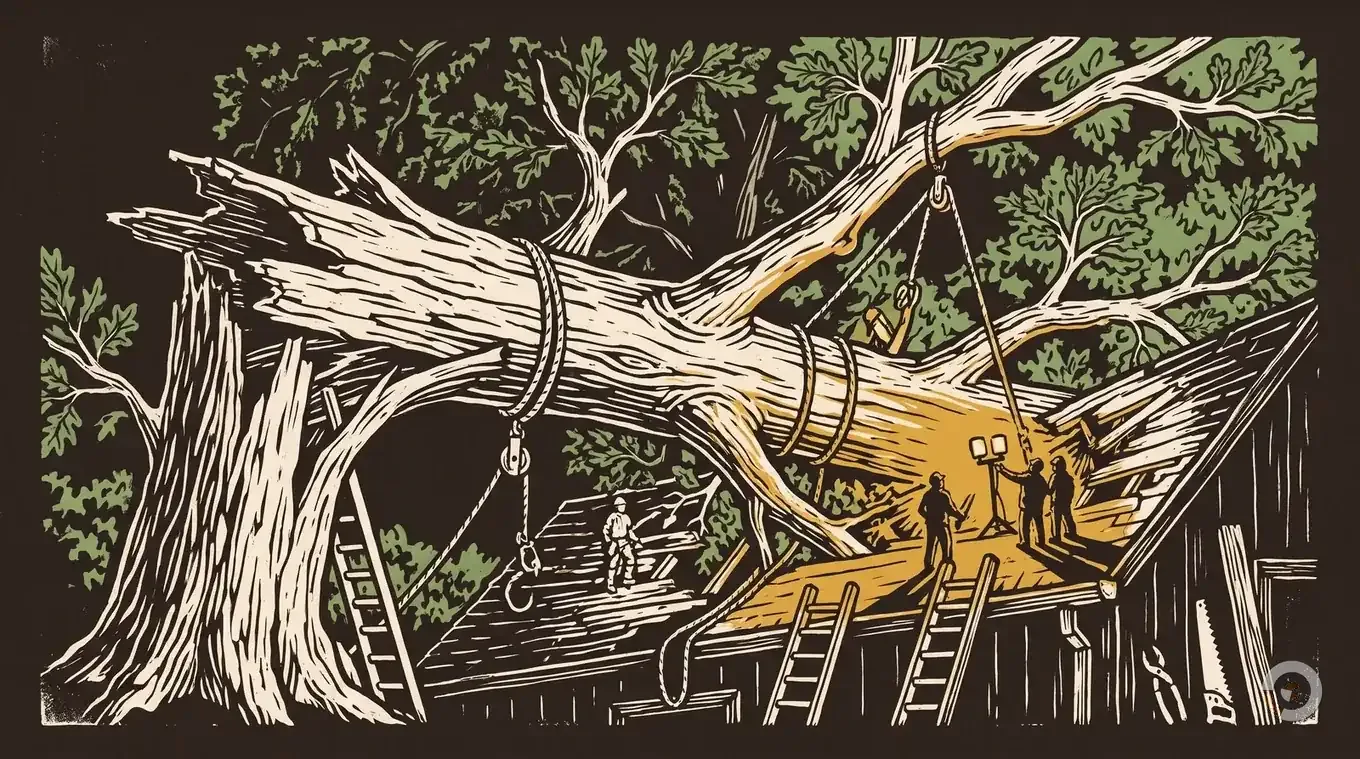
Stored energy is the real cost
A standing tree is predictable. A tree that has failed is a spring. A stem bent over a fence is holding energy that releases the instant the fibres are cut, and it releases in a direction set by the bend, not by the saw. Hung-up limbs, split unions and root plates half out of the ground are all the same problem in different shapes.
Drop zone
What insurance usually covers
The general pattern in US homeowner policies, which you must confirm against your own policy rather than against this page:
Tree hits a structure
The damage to the structure is normally the covered event, and removing the tree from it is usually part of that claim.
Tree falls in the yard
Frequently not covered, or covered only up to a small debris-removal sub-limit, because nothing insured was damaged.
Tree was already dead
Insurers commonly treat a known hazardous tree as a maintenance failure. A dated risk assessment is the document that argues otherwise.
Because the third case turns on documentation, a dated risk assessment on a tree you were already worried about is worth more than its cost.
The storm-chaser test
Four checks, all of which take under a minute and none of which a legitimate crew minds:
- A certificate of insurance emailed direct from the insurer, not a photo of a card.
- A local address that predates the storm, not a truck plate from three states away.
- A written scope before work starts, even a photograph of a handwritten one.
- No demand for cash up front. A deposit by card is normal; cash-only is not.
What insurance a real company carries, and roughly what it costs them, is in the insurance guide — worth skimming so you know what you are asking to see.
What to do first, before anyone arrives
The full walk-round, with the keep-or-remove triage and the photos an insurer wants, is in storm damage tree assessment. The short version:
- Get everyone out of rooms under the load and stay out.
- Assume every wire is live, stay well clear of any that are down, and call the utility first.
- Call the utility before the tree service if a conductor is involved at all.
- Photograph everything from a safe distance, before any clearing.
- Only then start calling crews — and price the standing job in the removal calculator so you know what the premium is being added to.