Emerald ash borer: treat, or remove?
Updated 2026-10-18 · 10 min read · Species & health
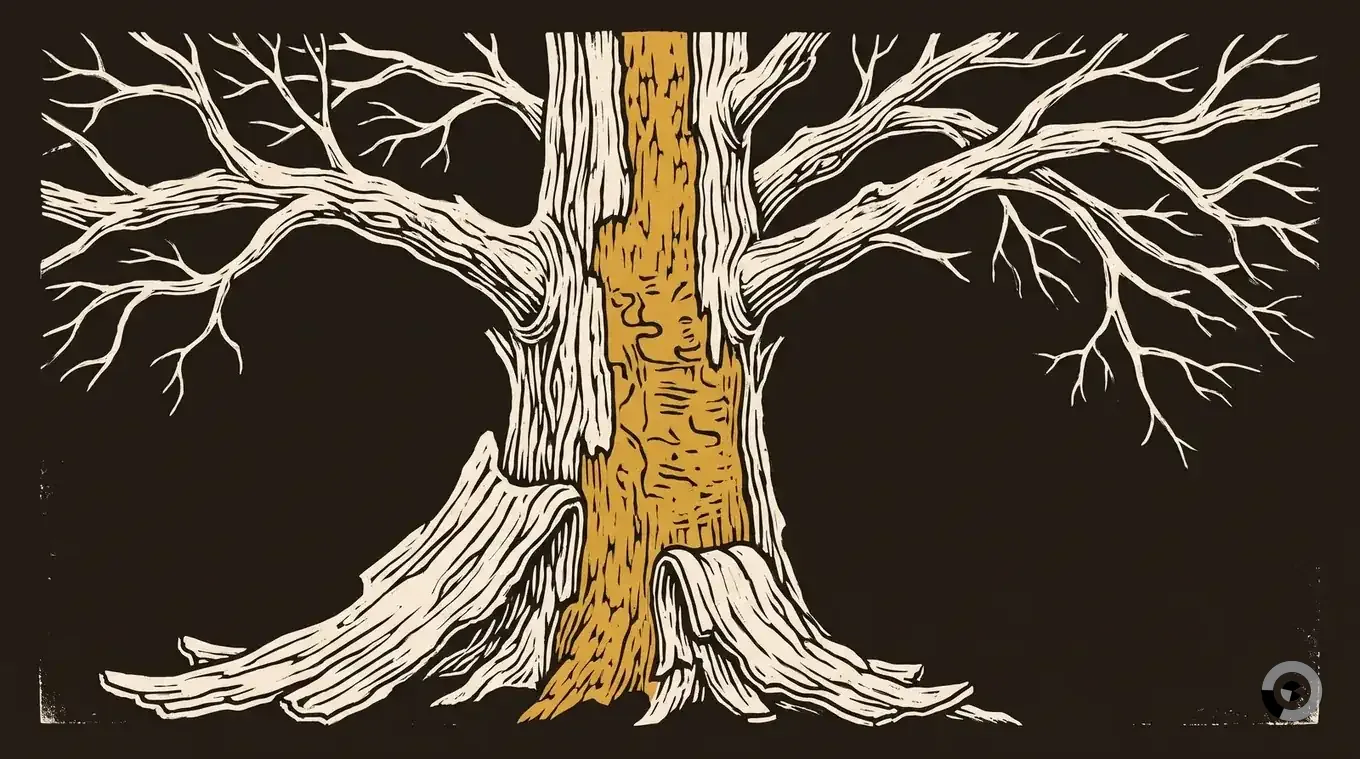
What to look for, in the order you will see it
- Thinning at the top of the canopy, working downward.
- Blond patches on the bark where woodpeckers have flaked it off chasing larvae.
- Epicormic sprouts — shoots straight out of the trunk, the tree's panic response.
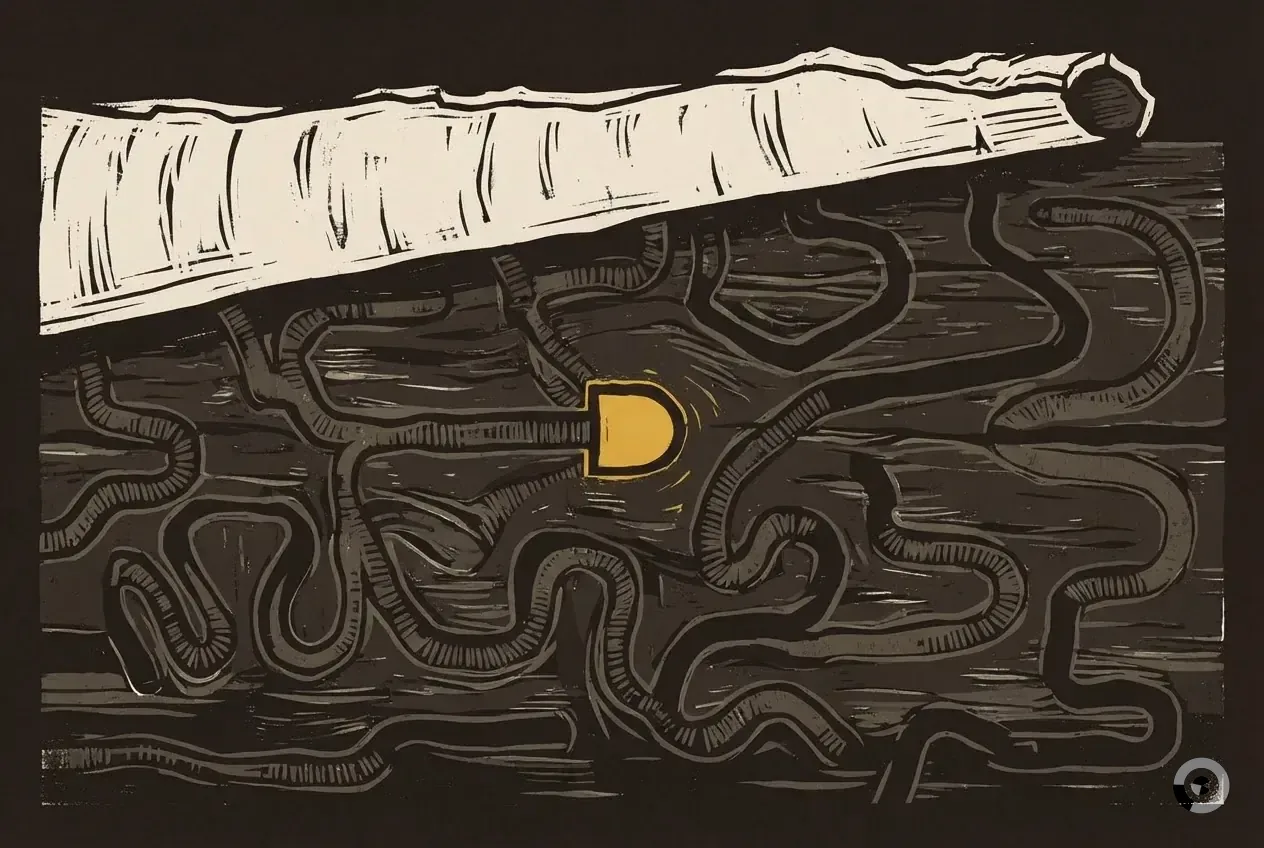
- D-shaped exit holes about an eighth of an inch across, and serpentine galleries under lifted bark.
Watch
The threshold that decides
| Canopy condition | Treatment prognosis | Sensible action |
|---|---|---|
| Full, healthy | Good | Treat on cycle if the tree is worth it |
| Some thinning, under 50%, under 30% of branches dead | Fair, declining | Still a candidate: treat now or plan the removal now |
| 50% thin or more, or 30%+ branches dead | Poor | Iowa State: no longer a treatment candidate; remove |
| Small leaves across the whole crown | None | Remove while climbing is still safe |
The threshold exists because treatment is systemic: it has to move through conducting tissue the larvae have already been eating. Below a certain amount of functioning canopy, the tree cannot distribute the product that would save it.
How treatment works
The mainstream method is trunk injection at the root flare, which puts a systemic insecticide directly into the vascular system and avoids soil and drift exposure. Iowa State extension says applications are needed every one to two years depending on the product, so this is a repeating cost for the life of the tree, not a one-off.
Product names, rates and re-treatment intervals change and are regulated per state. Confirm the current label with your state extension service or a licensed applicator; this page does not name a product or a price because neither could be verified live at the time of writing.
The money question, honestly framed
The labour under both options is the same arithmetic as everywhere on this site: BLS puts the hourly mean for tree trimmers at $26.91 (OEWS, May 2025), which loads to roughly $41.71 per crew-member hour. Injection is a short visit repeated every few years; removal is a big single visit that also removes the shade, the screen and the property value.
The comparison to run is total treatment cost over the years you expect to stay, against the removal cost plus the value of what is lost, which is what the appraisal calculator exists to estimate. For a large ash shading a house, treatment often wins that comparison comfortably — for a small one in a back corner, it rarely does.
Why a dead ash gets expensive
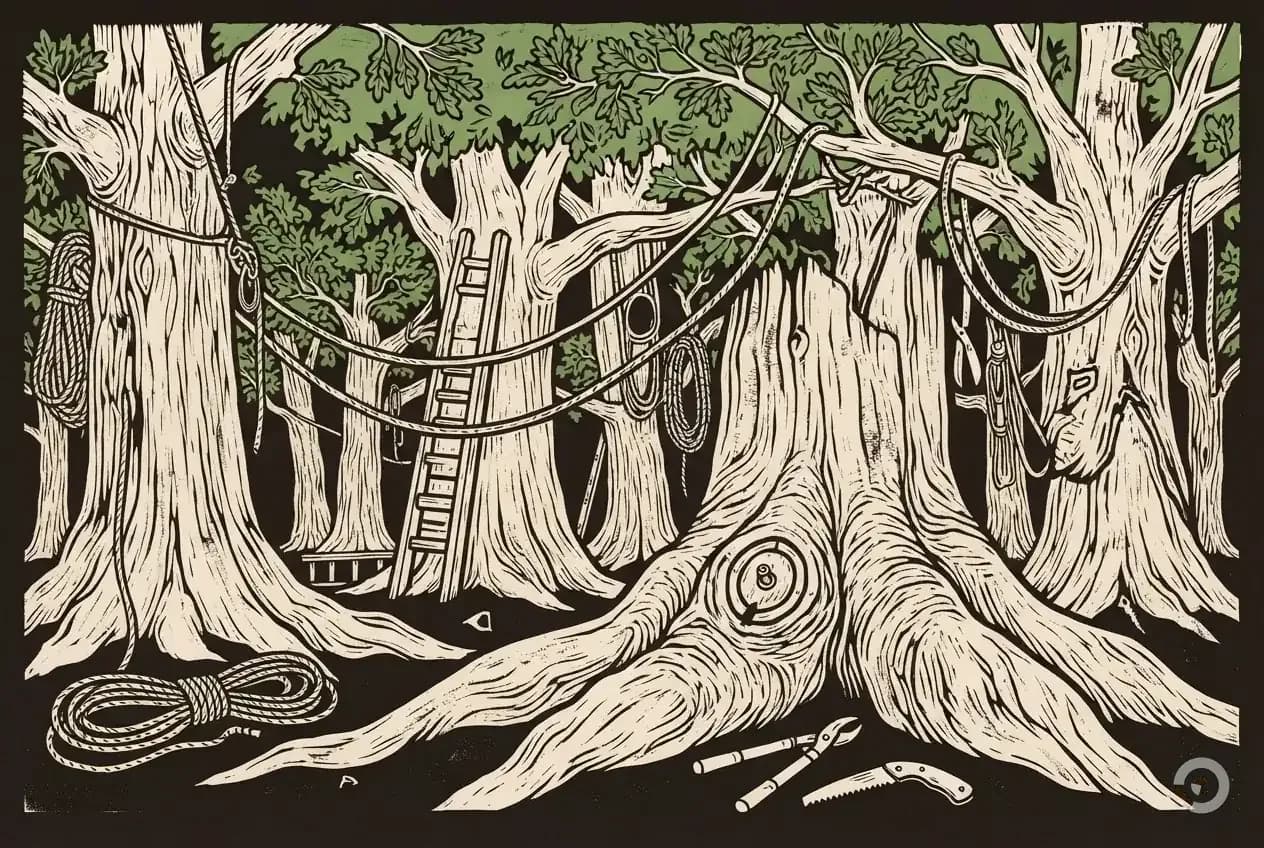
Ash killed by EAB goes brittle unusually fast. Within a couple of years the limbs will not hold a climber and the wood fails without warning under rigging loads, which pushes the job from a climbing removal into a crane or lift removal — a different and larger invoice.
That is the hidden cost of deferring the decision: the same tree removed three years late costs materially more than removed today. If the canopy is already past half, run the risk form and get it booked.
Sources
- Iowa State University Extension — Emerald ash borer: candidates need less than 50% canopy thinning or less than 30% of branches dead; reapply every 1 to 2 years by product; decline typically 2 to 4 yearsretrieved 2026-10-18
- Purdue University Extension Entomology — EAB identification: D-shaped exit holes about 1/8 inch, S-shaped galleries, epicormic shootsretrieved 2026-10-18
- BLS OEWS May 2025 · 37-3013 · hourly mean $26.91 (the labour line under injection and removal)retrieved 2026-09-04