Starting a tree service, priced honestly
Updated 2026-09-04 · 12 min read · Safety & the trade
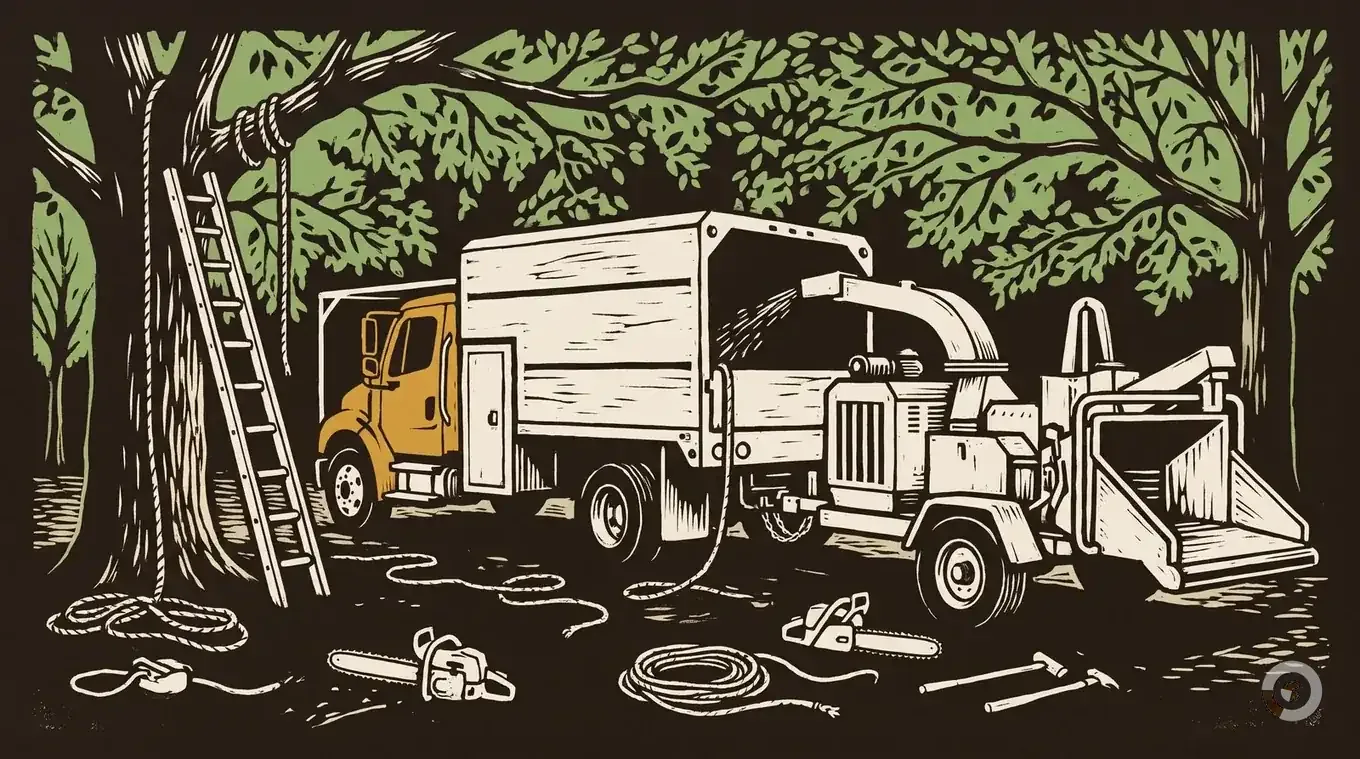
Three equipment stages
| Stage | Kit | Work it lets you take |
|---|---|---|
| 1 — Climb and haul | Pickup, trailer, saws, climbing kit, PPE | Pruning, small removals, storm cleanup |
| 2 — Process on site | Chipper (rented, then owned), chip box | Full removals without a second haul day |
| 3 — Ground and lift | Stump grinder, then a lift or crane hire | Stumps on the same visit; big or tight removals |
Rent the chipper and the grinder until the calendar shows you using them most weeks. A rental line is a cost of goods sold; a finance payment is a fixed cost that does not care whether it rained.
Insurance is the entry ticket, not an overhead
Three policies, and the second one is the one that stops most people:
General liability
Damage you cause to property. Every commercial client and most homeowners will ask for the certificate.
Workers' compensation
Injury to your people. Tree work sits in a high-rate class because the injuries are severe. This is the largest line.
Inland marine / equipment
Your saws, chipper and grinder against theft and damage — the line new owners forget until a trailer disappears.
What it costs and why the comp class is so expensive is in the insurance guide.
The break-even arithmetic
Federal data gives the payroll floor: the hourly mean for tree trimmers and pruners is $26.91, annual mean $55,970 (BLS OEWS, May 2025). Loading that about 1.55× for payroll tax, high-risk comp and non-billable time gives roughly $41.71 per crew-member hour.
| Line | Per crew hour |
|---|---|
| Three-person crew, loaded | $125.13 |
| Truck, chipper, fuel, maintenance | $45–$95 |
| Direct cost to be on site | $170–$220 |
| Bid at 1.6×–2.1× to cover overhead and margin | $272–$462 |
Sound
Where the first ten jobs come from
Not advertising. In order of what actually works: other tree services subcontracting overflow, landscapers who do not climb, property managers with recurring small work, and neighbours of jobs you have already done — which is why the truck being tidy and the site being swept matters more than a logo.
Give every one of them a written estimate, even the small ones. Use the estimate template so the line items are the same every time and you can compare what you priced against what it took.
Pricing without guessing
Price from hours, not from a feeling about the tree. Walk the job, decide crew size and hours, apply the model, then sanity-check the answer against the removal calculator or the trimming calculator. If your number is far under, you have missed access; if it is far over, you have double-counted the stump.
Then track actual hours against estimated hours for the first fifty jobs. That single habit is the difference between a business that grows and one that is busy.
Sources
- BLS OEWS May 2025 · 37-3013 · hourly mean $26.91, annual mean $55,970 (the payroll you are underwriting)retrieved 2026-09-04
- BLS OEWS May 2025 · 37-3013 · national employment 55,160retrieved 2026-09-04