What arborists earn, read off the federal data
Updated 2026-09-04 · 8 min read · Safety & the trade
The numbers
| Measure | Hourly | Annual |
|---|---|---|
| 10th percentile | $18.24 | $37,940 |
| Median (50th) | $24.50 | $50,960 |
| Mean | $26.91 | $55,970 |
| 90th percentile | $38.61 | $80,310 |
National employment in the occupation is 55,160. For comparison, the adjacent occupation 45-4011, forest and conservation workers, employs 6,050 at an annual mean of $43,680 — a smaller, lower-paid field that is often confused with this one.
Sound
Why the spread is so wide
The gap between the tenth and ninetieth percentile is $18.24 to $38.61 an hour — more than double. That is not noise. It is the difference between dragging brush and being the person on the rope in a tree over a house, and between a two-truck residential outfit and a utility line-clearance contractor with a union agreement.
Three jobs, one job title
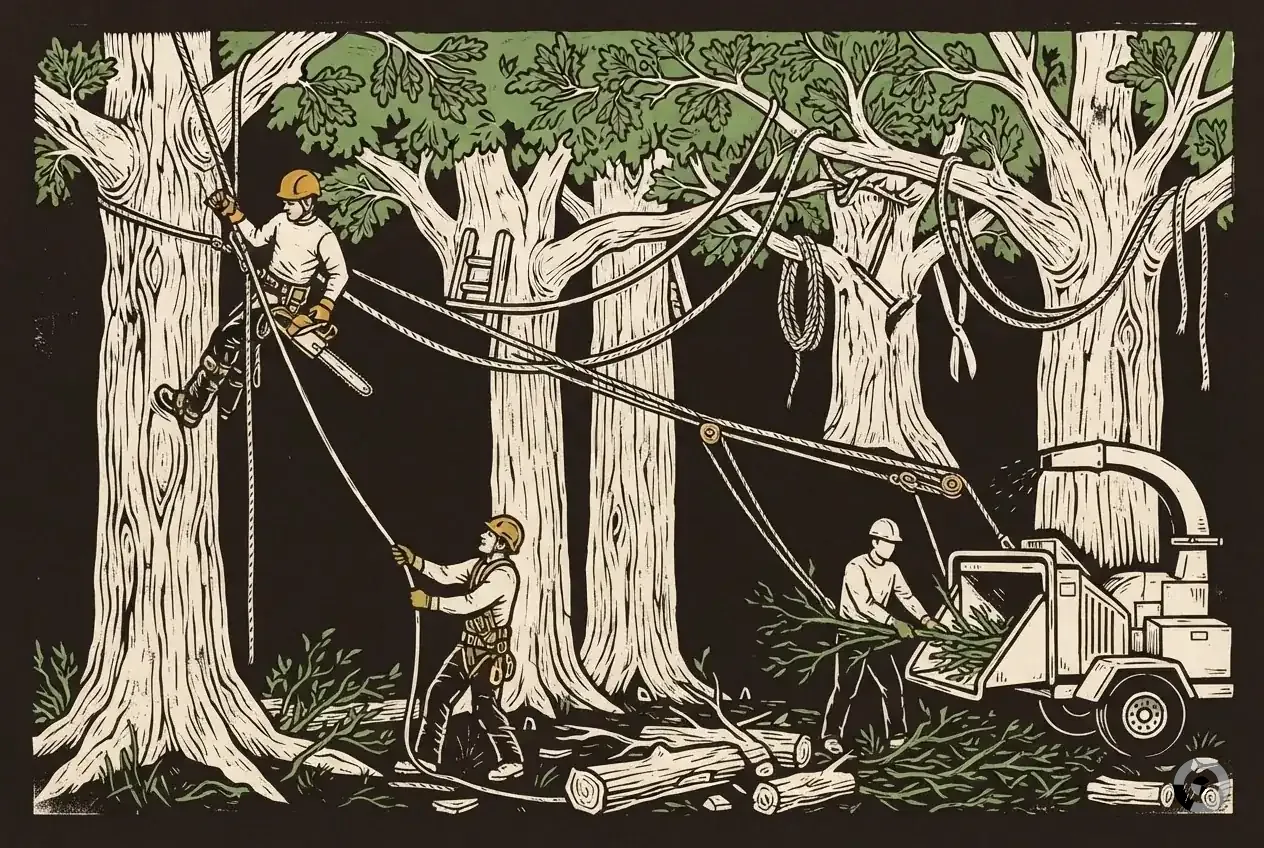
Groundie
Drags brush, feeds the chipper, tends ropes. Where almost everyone starts, and where the tenth percentile lives.
Climber
Ascends, rigs and makes the cuts. The skill that pays, and the position the median describes.
Crew leader / consulting arborist
Prices work, writes reports, carries the credential and the liability. The top decile.
What actually moves pay
Four levers, roughly in order of effect: becoming a productive climber; adding a credential that lets you sign something (see ISA certification); moving into utility line clearance, which pays a premium for the qualification and the hazard; and moving into consulting, where you are selling judgement rather than hours.
The route through the first two is laid out in how to become an arborist.
The owner's side of the same number
If you are pricing work rather than taking a wage, the figure that matters is the loaded cost. Taking the $26.91 hourly mean and loading it about 1.55× for payroll tax, a high-risk workers' compensation class and non-billable time lands near $41.71 per crew-member hour — the number every cost calculator on this site is built on.
That loading is an assumption, and the insurance guide covers the biggest line inside it. If you are heading toward running the truck yourself, start at how to start a tree service.
Sources
- BLS OEWS May 2025 · 37-3013 Tree Trimmers and Pruners · employment 55,160retrieved 2026-09-04
- BLS OEWS May 2025 · 37-3013 · annual mean $55,970 · annual median $50,960retrieved 2026-09-04
- BLS OEWS May 2025 · 37-3013 · hourly mean $26.91 · median $24.50 · 10th $18.24 · 90th $38.61retrieved 2026-09-04
- BLS OEWS May 2025 · 45-4011 Forest and Conservation Workers · employment 6,050 · annual mean $43,680retrieved 2026-09-04