From groundie to arborist: the actual route
Updated 2026-10-18 · 10 min read · Safety & the trade
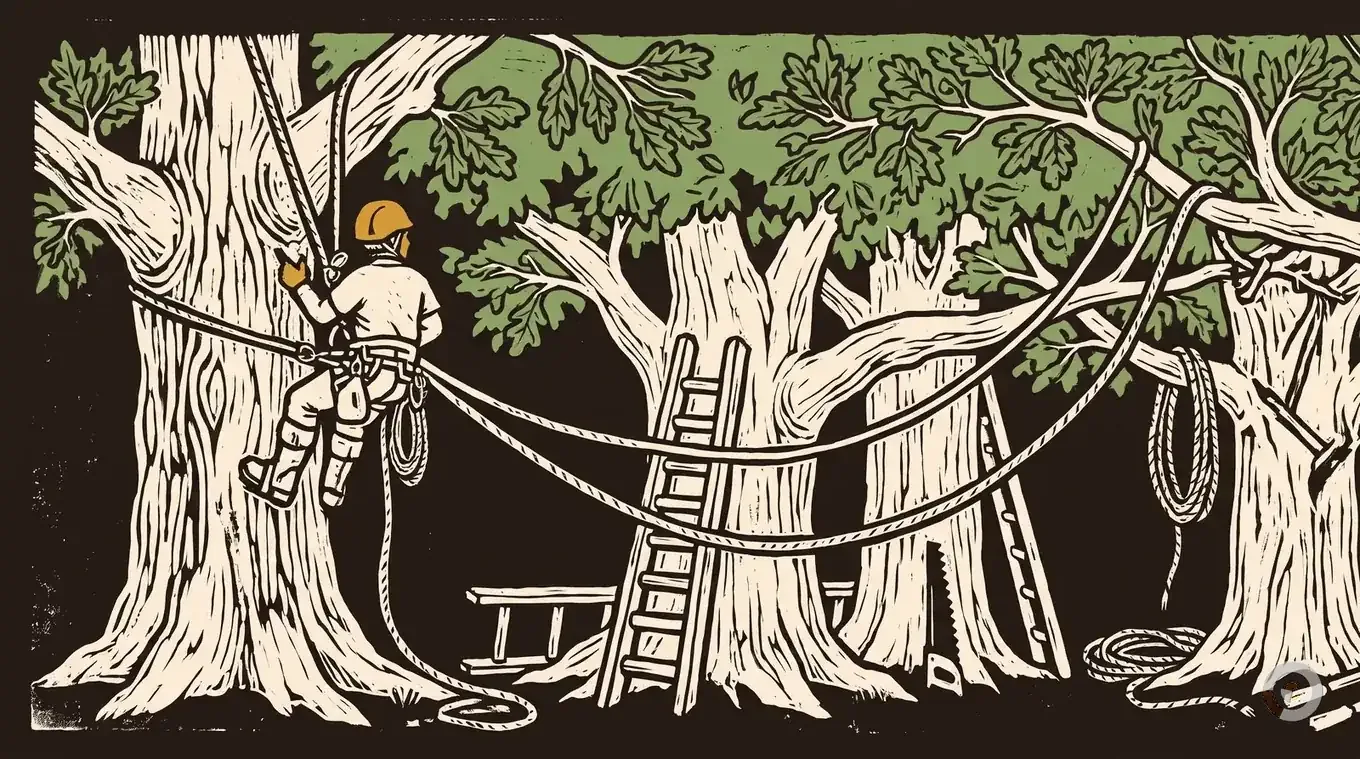
What the job actually is
Outdoors in every weather, physically hard, and mentally more technical than it looks from the kerb. A climber is solving a rigging problem in three dimensions while running a saw one-handed at height. It is also one of the more dangerous occupations in the country, which is why the training sequence is not negotiable.
Drop zone
The five steps
- Get on a crew as a groundie. This is a real entry-level job with no prerequisite beyond fitness and reliability. You will drag brush for months and learn more than any course would teach you.
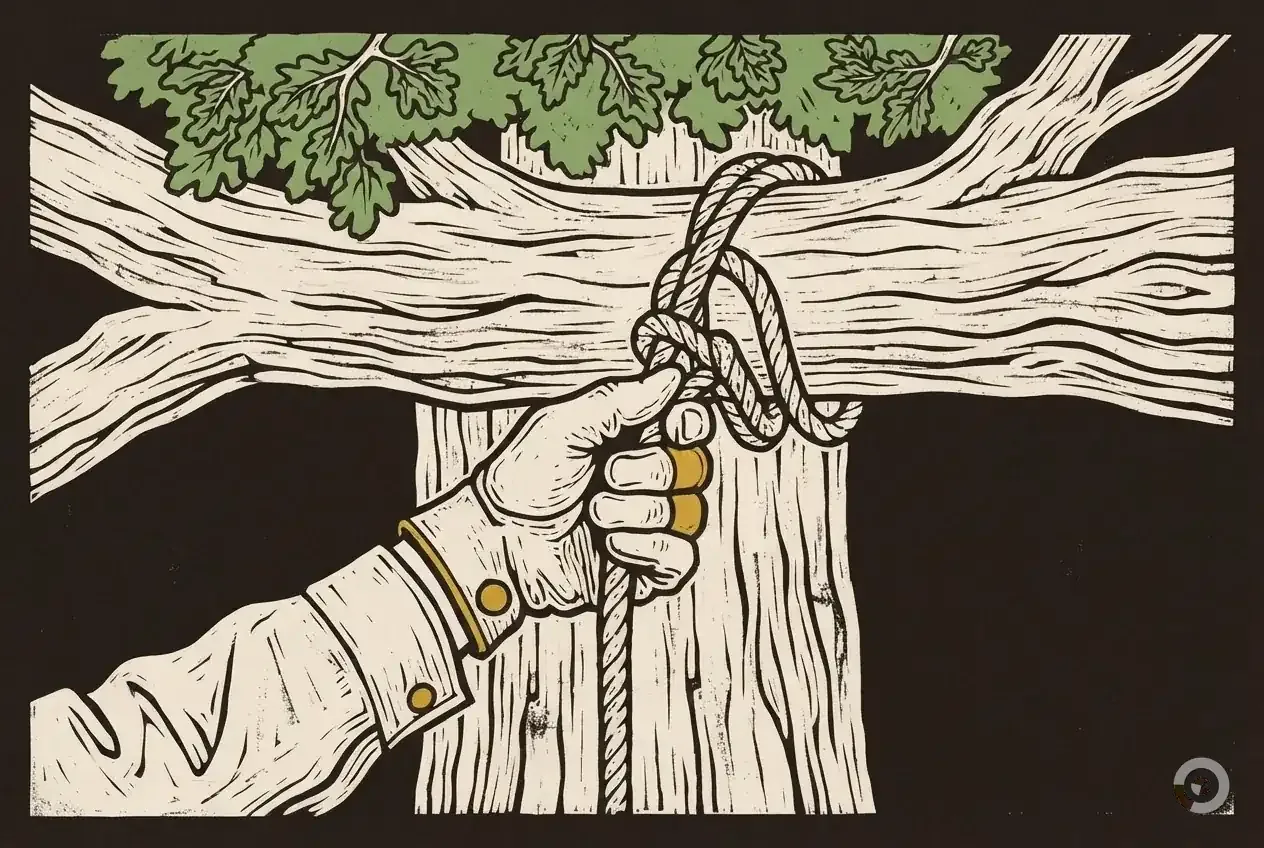
- Learn the ropes literally. Knots, friction hitches, rigging physics, lowering devices. Most of this is taught by the crew leader on real jobs.
- Get formal chainsaw and aerial-rescue training. Aerial rescue before climbing, not after — the point of the rule is that a climber must be recoverable.
- Start climbing on easy trees. Ascent, work positioning, small removals with no target beneath. Confidence is earned in that order.
- Take the credential. ISA certification once you have the eligibility experience and can answer a diagnosis question without guessing.
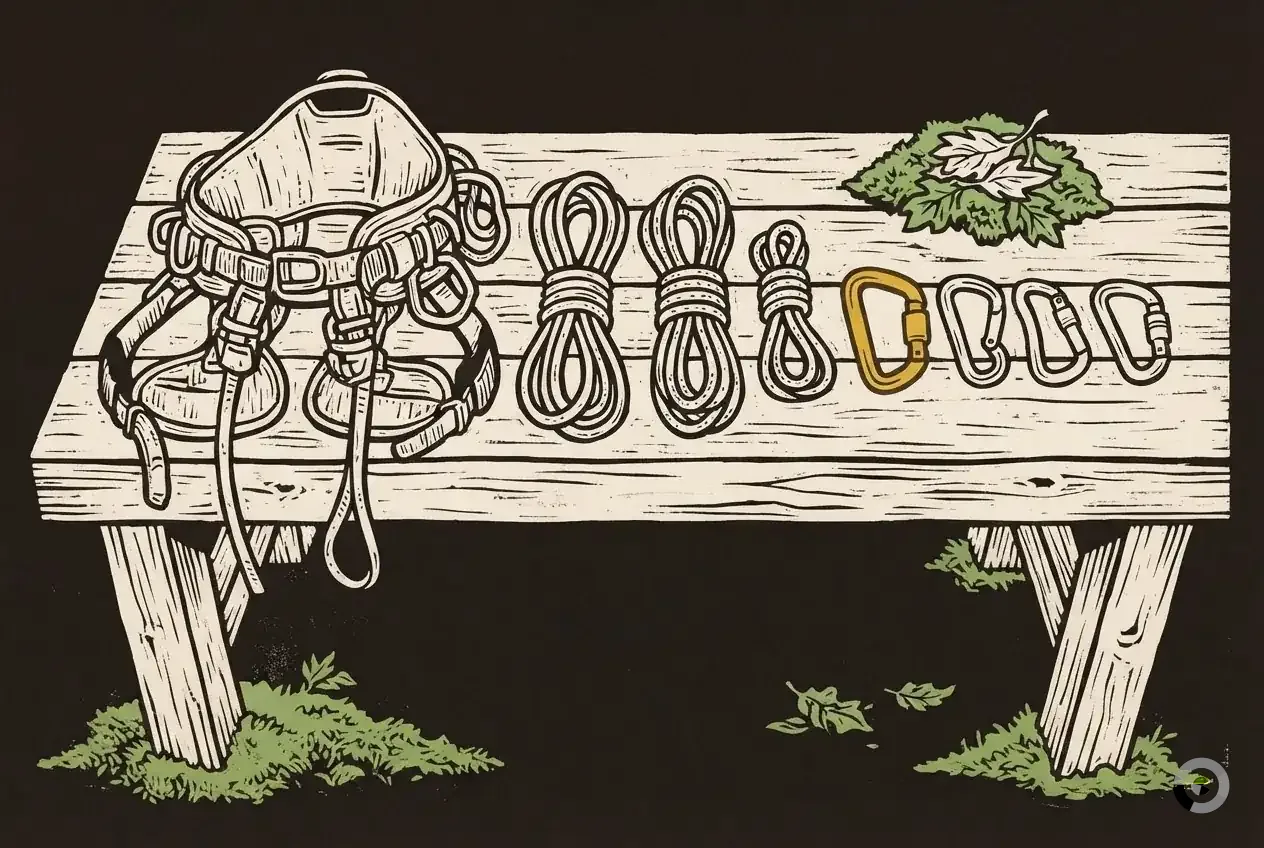
What you buy, and when
| Stage | What you need | Who normally pays |
|---|---|---|
| Groundie | Boots, helmet, eye and ear protection, gloves | A decent employer provides it |
| Saw work | Chainsaw chaps or trousers, cut-resistant boots | Employer, or refuse the work |
| Climbing | Saddle, ropes, hitch cords, carabiners, lanyard | Increasingly yours; buy once, buy well |
| Credential | Study material, exam sitting, CEUs | You, sometimes reimbursed |
Watch
When to sit the exam
ISA sets eligibility by documented experience, and the exam covers the whole body of knowledge rather than climbing alone — soil, diagnosis, pruning standards, risk. Most people are ready somewhere in the third year, which is also when the exam stops being memorisation and starts being recognition of things you have seen.
ISA's program guide asks for three years of full-time experience in arboriculture, or a mix of education and experience, before the Certified Arborist exam. On 18 October 2026 ISA listed the application at $50 and exam enrollment at $396 at the standard rate, or $40 and $295 for ISA members. Fees change, so check ISA's page before you budget; the full table is in the ISA credential guide.
What each stage pays
Federal data gives the shape of it. For tree trimmers and pruners in May 2025, the tenth percentile is $18.24 an hour, the median $24.50, and the ninetieth $38.61, across 55,160 people. Roughly: groundie at the bottom, working climber at the middle, crew leader or consultant at the top.
The percentile detail and what moves you up it is in arborist salary. If the goal is your own truck rather than someone else's, the capital and insurance side is in how to start a tree service business.
Sources
- BLS OEWS May 2025 · 37-3013 Tree Trimmers and Pruners · employment 55,160, hourly 10th $18.24, median $24.50, 90th $38.61retrieved 2026-09-04
- ISA — Credentials common questions: application $40 / $50, exam enrollment $295 / $396 (member / standard)retrieved 2026-10-18
- ISA Certified Arborist program guide (PDF): three years' experience before the examretrieved 2026-10-18
- International Society of Arboriculture — credentials and continuing education (Z133-2026 listed in publications)retrieved 2026-09-04