DBH calculator: circumference to diameter
Section: Species & health
Pre-filled with a realistic job. Change any input and the figure updates as you type — nothing is sent anywhere, and Print gives you a clean sheet without the buttons.
- Circumference entered75.4 in
- Diameter24.0 in
- Radius12.0 in
- Basal area3.142 sq ft
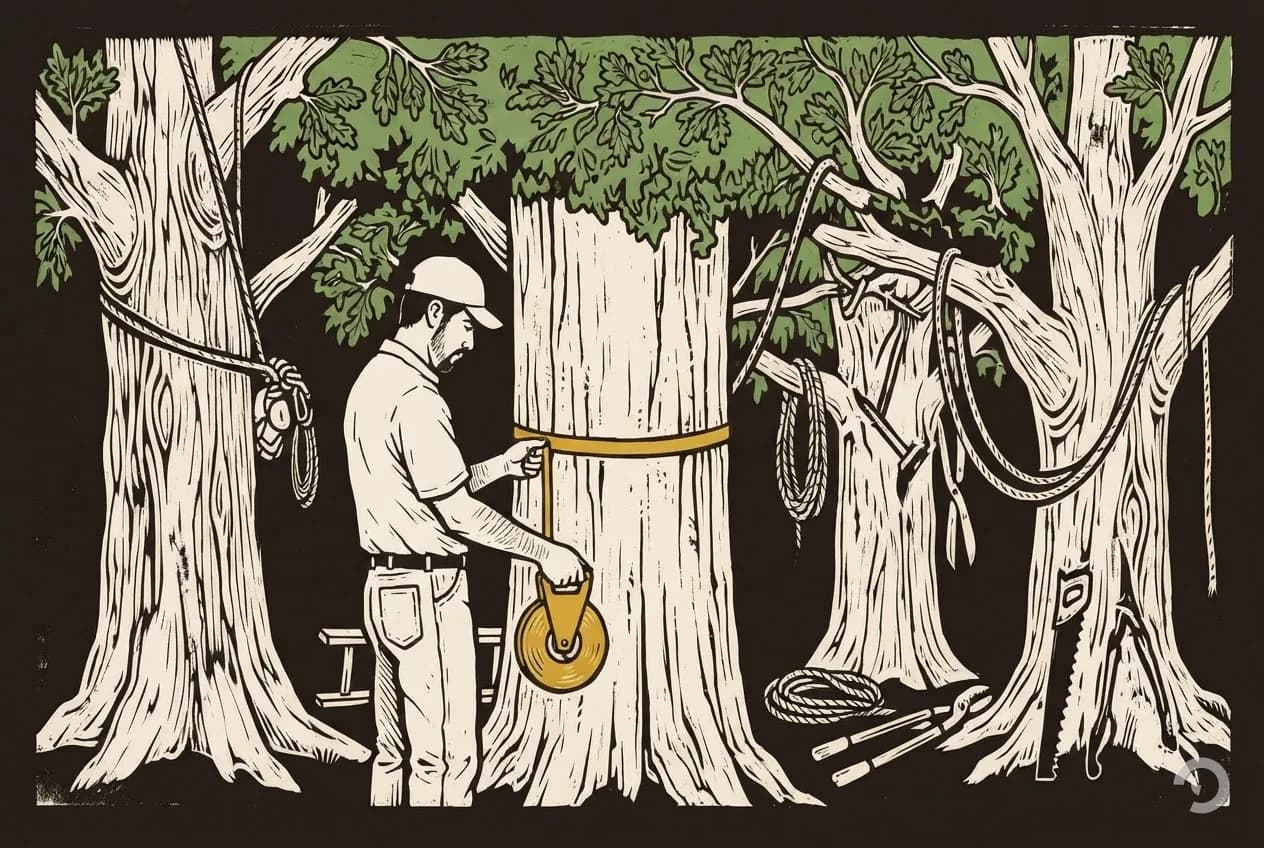
Why 4.5 feet, and why it matters
Four and a half feet is the international convention for forestry and arboriculture, which is the only reason it matters — every threshold, table and formula you will meet assumes it. A measurement taken at three feet is not a conservative estimate; it is a different number that will read as a bigger tree.
Sound
The awkward trees
| Situation | Where to measure | Note it as |
|---|---|---|
| Tree on a slope | 4.5 ft above ground on the uphill side | "uphill side" |
| Swelling or burl at 4.5 ft | Immediately below the swelling | the actual height used |
| Leaning stem | 4.5 ft along the stem, perpendicular to it | "along stem" |
| Forks below 4.5 ft | Each stem separately, then combine | "multi-stem, n stems" |
| Forks above 4.5 ft | Once, below the fork | single stem |
The multi-stem rule people get wrong
Adding the stem diameters together overstates the tree badly, because area scales with the square of diameter. The convention is the quadratic mean — square each diameter, add them, take the square root — which preserves total basal area and gives the diameter of the single stem that would have the same cross-section.
Three stems of 18, 12 and 9 inches sum to 39 inches, which sounds like a very large tree. Their quadratic mean is about 23.6 inches, which is the honest answer and often the difference between clearing a permit threshold and not — see the permit guide.
What to do with the number
Feed it into the removal calculator for a price band, into the appraisal calculator for a replacement value, or into the permit checker to see whether the ordinance applies. Height, if you need it, is in the height calculator.